
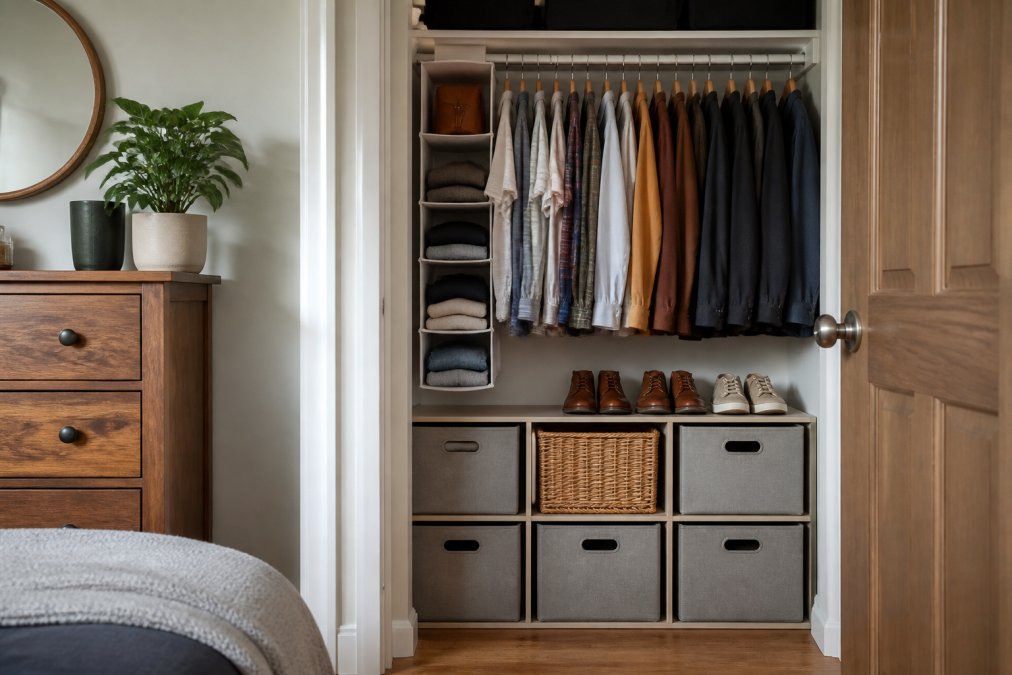
Table of Contents
- Why Small Closets Fail (And How to Fix Yours)
- Decluttering Tips for Bedrooms: The Foundation of Any Closet
- Small Closet Storage Hacks That Actually Work
- Best Closet Organisers for Small Spaces Without Breaking the Bank
- DIY Organization Systems for Tight Budgets
- Maintaining Your Organized Closet: A Simple Schedule
- When to Invest in Custom Solutions
- Frequently Asked Questions
Last Updated: September 17, 2026
Why Small Closets Fail (And How to Fix Yours)
Organizing a small bedroom closet budget doesn’t have to feel cramped. The real problem is wasted vertical storage and poor organization, not the space itself.
Organization comes down to three things: what you keep, how you arrange it, and what tools you use. Budget-friendly hardware, smart decluttering, and strategic placement can transform a cramped closet into something that actually works.
The biggest mistake people make is buying organizers before decluttering. You’ll end up with expensive storage bins full of clothes you don’t wear. Start by purging first, then organize what remains.
Decluttering Tips for Bedrooms: The Foundation of Any Closet
You cannot organize clutter. Before you buy a single shelf divider or tension rod, you need to reduce what’s actually in your closet.
The Four-Box Method
Grab four boxes or bags and label them: Keep, Donate, Sell, and Discard. Go through each item one at a time. Ask: Do I wear this? Does it fit? Do I feel good in it? This method forces a decision and prevents endless rearranging.
Keep: Clothes you wear regularly and feel good wearing.
Donate: Items in good condition you no longer wear. Charities accept these.
Sell: Designer pieces or items in excellent condition. Online marketplaces make this easy.
Discard: Broken zips, stains that won’t come out, or pieces beyond repair.
Seasonal Rotation to Free Up Space
Seasonal rotation stores off-season clothes elsewhere and brings in what you need now. Store winter items in summer and vice versa using under-bed boxes or a separate cupboard, labeled clearly. This frees up 30-40% of your closet space without buying anything new.
Decluttering and seasonal rotation create space without spending money. These two steps alone often make additional organizers unnecessary.
Small Closet Storage Hacks That Actually Work
Once you’ve decluttered on a small bedroom closet budget, it’s time to maximize every inch of space. Small closet storage hacks focus on using vertical space, using hidden areas, and choosing the right tools.
Vertical Storage: Your Hidden Asset
Install a second rod above your existing one to double hanging capacity. Add shelves above the existing rod for folded items. Use multi-pocket hanging organizers for scarves, belts, and accessories. Most people use only 40% of available vertical space, these solutions reclaim the rest.
Vertical storage options:
- Second hanging rod (tension rod or fixed rod)
- Wall-mounted shelves above the existing rod
- Over-the-door organizers for shoes or accessories
- Hanging shelf dividers to create separate zones
Under-Bed and Door-Mounted Solutions
Use under-bed storage boxes for seasonal items and off-season shoes. Over-the-door shoe organizers hold 12-20 pairs without installation. Adhesive hooks on the door hold scarves, bags, and jewellery.
Budget-Friendly Hardware and Tension Rods
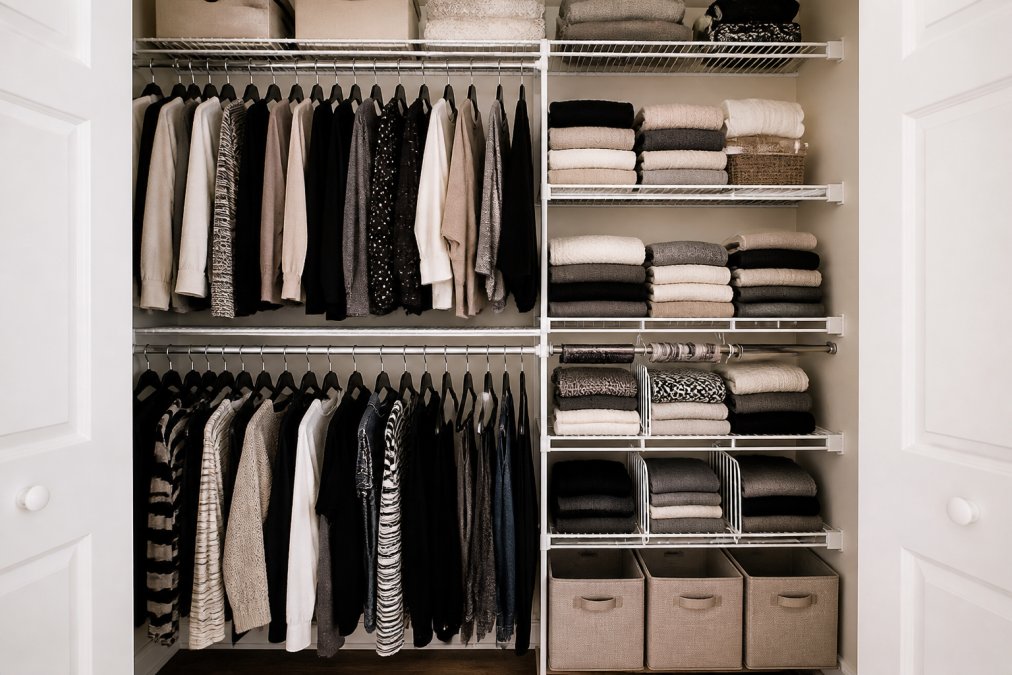
Tension rods are cheap and require no installation. Place one horizontally on a shelf to create a divider for lightweight items, or vertically in a corner to create an extra hanging zone. They’re adjustable and fit most closet widths. Maximizing these small storage zones provides the necessary foundation for building a wardrobe that remains both functional and clutter-free.
Other budget-friendly hardware: adhesive hooks, shelf dividers, drawer dividers, S-hooks, and Command strips. Most cost under £5 per item.
Avoid overloading tension rods with heavy items. They’re designed for lightweight garments and accessories. For heavy coats or multiple thick jumpers, use a fixed rod instead.
Best Closet Organisers for Small Spaces Without Breaking the Bank
Once you’ve maximized your space with vertical storage and budget hardware, it’s time to add organisers that keep everything tidy.
Shelf Dividers and Drawer Dividers
Shelf dividers separate clothing types and prevent pile collapse. Drawer dividers organize socks, underwear, and accessories. Both cost just a few pounds and often come in sets.
Storage Bins and Hanging Organizers
Use clear storage bins labeled clearly for seasonal items and shoes. Hanging organizers with multiple pockets keep small items accessible and free up shelf space. Measure before buying to ensure organisers fit your closet dimensions.
DIY Organization Systems for Tight Budgets
Repurpose items you already have: shoe boxes as drawer dividers, jars for accessories, magazine holders for handbags. Paint cardboard boxes to match your closet. Use adhesive hooks for bags and belts. The key is measuring first and thinking creatively about what you can repurpose.
Maintaining Your Organized Closet: A Simple Schedule
Organization doesn’t stick without maintenance. The difference between a closet that stays organized and one that doesn’t is a simple maintenance rhythm.
Why Closets Relapse: The Three Common Failure Points
Organization typically breaks down at three points: worn clothes piling up (create a designated “worn but clean” zone), new items without homes (establish a rule that every new item gets a home before wearing), and seasonal transition lag (set a specific date to rotate items, not “whenever you get around to it”).
Weekly Maintenance (5 Minutes)
Hang up worn clothes immediately, this prevents 80% of closet chaos. Return wandering items to their designated spots. Straighten one shelf or section weekly to keep the system manageable.
Monthly Check-In (10-15 Minutes)
Assess what you’re actually wearing to see if your system matches your habits. Straighten stacks so everything is visible. Check for new items without homes. Remove items unworn for a month that aren’t seasonal.
Seasonal Rotation (1-2 Hours, Twice Yearly)
When seasons change, remove off-season items and store them in labeled boxes. Bring in-season items back into your closet. As you rotate, assess each item, if it doesn’t fit or you don’t like it, remove it now. This frees up 30-40% of your closet space.
Quarterly Deep Tidy (30 Minutes)
Every three months, reorganize one chaotic section, check that dividers and organisers are in place, and reassess whether your system is working. Make small adjustments as needed.
Annual Full Declutter and Reorganize (2-3 Hours)
Once a year, pull everything out and sort using the four-box method. Be ruthless: if you haven’t worn it in a year and it’s not a special occasion piece, it goes. Reorganize based on what you actually wore this year. Check that your storage solutions still work. This annual reset prevents clutter creep and keeps your system aligned with your lifestyle.
The Psychology of Maintenance: Why Small Efforts Work
Small, regular efforts feel manageable and prevent the “it’s too much” response that leads to giving up. Regular maintenance keeps you aware of what you own, reducing duplicate purchases and making organization easier over time.
The secret to a closet that stays organized isn’t a perfect system, it’s a maintenance rhythm that prevents relapse. Five minutes weekly, ten minutes monthly, and two hours seasonally will keep your closet functional for years.
When to Invest in Custom Solutions
Budget organization works well for most people. But awkward spaces, sloping ceilings, or irregular dimensions require custom fitted solutions. A custom-fitted wardrobe uses every inch of available space and lasts decades. If you’re staying long-term, custom fitted furniture makes sense. Finest Furniture Studio specializes in bespoke wardrobes and storage solutions designed for awkward spaces, with a 10-year warranty. For renters or those who move frequently, budget solutions are the way to go.
Organizing a small bedroom closet on a budget is achievable. Start by decluttering ruthlessly. Use vertical space, tension rods, and budget-friendly hardware. Add shelf dividers and storage bins to keep everything tidy. For a permanent, custom-fitted wardrobe that transforms an awkward closet, Finest Furniture Studio offers bespoke solutions with a 10-year warranty and transparent pricing. Book a free design visit to see how custom fitted wardrobes can maximize your space.
| Organization Step | Time Required | Frequency |
|---|---|---|
| Declutter using four-box method | 2-4 hours | Once or twice yearly |
| Install vertical storage and tension rods | 1-2 hours | One-time setup |
| Add shelf and drawer dividers | 30 minutes | One-time setup |
| Weekly tidy and hanging | 5 minutes | Weekly |
| Monthly shelf straightening | 10 minutes | Monthly |
| Seasonal rotation | 1-2 hours | 2 times yearly |
Frequently Asked Questions
What’s the cheapest way to organise my closet?
Start by decluttering ruthlessly, remove items you haven’t worn in a year. Then use affordable organisers: tension rods (£5-15), storage bins (£10-20), and shelf dividers (£8-12). Vertical storage and under-bed solutions cost little but transform capacity. Many people already have boxes or baskets at home that work perfectly. The key is maximizing what you have before spending money on new organisers.
How do I organize a very small bedroom closet?
Prioritize vertical storage: install additional shelves or use hanging organizers to go up the walls. Use space-saving hangers and fold items into compact stacks with shelf dividers. Under-bed storage and door-mounted racks add capacity without taking up floor space. Declutter first so you’re only storing items you actually wear. A small closet with the right layout and no clutter functions better than a large one stuffed with things you don’t need.
What are common closet organizer mistakes?
The biggest mistake is buying organisers before decluttering, you end up with expensive bins full of items you never wear. Another is ignoring vertical space; many people use only eye-level shelving. Overcrowding drawers and shelves makes items hard to access and damages fabrics. Poor labeling means you can’t find what you need. Finally, failing to maintain your system leads to chaos within weeks. Start with a purge, then organize what remains.
How can I make my small closet look more expensive on a budget?
Consistency is everything. Use matching storage bins or baskets in neutral colours (white, grey, natural wood tones). Install uniform shelf dividers and label everything neatly with simple, elegant labeling. Keep items folded and stacked tidily, a well-organized closet always looks more expensive than a cluttered one, regardless of the items inside. Good lighting (a simple LED strip costs £15-30) makes the space feel larger and more upmarket. Quality doesn’t require spending a fortune; it requires order and attention to detail.

