

Table of Contents
- Planning Your Period Property Renovation
- Identifying Which Original Features to Restore
- Restoring Original Sash Windows
- How to Restore Original Timber Floors
- Restoring Fireplaces, Cornicing, and Decorative Details
- Period Home Renovation Mistakes to Avoid
- Balancing Period Character with Modern Living
- Frequently Asked Questions
Last Updated: October 15, 2026
Planning Your Period Property Renovation
To restore period features during renovation preserves your home’s architectural character, but it demands careful planning and honest assessment. Get it wrong and you’ll strip away the very qualities that make period properties special. Start by understanding what you have, and what you’re legally allowed to change.
Research Your Home’s History and Original Design
Before you touch anything, find out what your home originally looked like. Most period properties have been modified over decades, walls removed, fireplaces boarded up, original windows replaced. Start with public records: local authority planning archives, the Land Registry, and old maps and photographs.
Check Protection Status Before You Plan Anything
This is the step most homeowners skip, and it can halt a project mid-build. Two designations matter:
- Listed building, Grade I, II* or II. Any alteration that affects the building’s special architectural or historic interest requires listed building consent from your local planning authority. This includes internal work: removing a fireplace, stripping original plaster, replacing sash windows, even re-painting in some cases. Carrying out unauthorised work is a criminal offence, not just a planning breach (gov.uk).
- Conservation area, stricter controls on demolition, external alterations, roof materials, and sometimes trees. Permitted development rights are often withdrawn, so even small changes may need planning permission.
Article 4 Directions can further remove permitted development rights in specific areas. Check your local authority’s planning portal or call the conservation officer directly, usually the best source of pre-application guidance.
If your property is listed, get written confirmation of what is and isn’t consented before instructing any contractor. “We didn’t know” is not a defence, and enforcement action can require you to reverse completed work at your own cost.
Building Regulations and Energy Efficiency
Building regulations apply to most renovation work regardless of listing status, structural alterations, electrical work, replacement windows, insulation, and change of use. Listed buildings aren’t exempt, though inspectors can agree alternative approaches where strict compliance would harm historic fabric. Energy efficiency and conservation pull against each other: you cannot inject modern insulation into a solid-walled period property without trapping moisture, causing timber rot and masonry decay. The practical approach:
- Secondary glazing rather than replacing original sash windows
- Breathable insulation (wood fibre, lime-based) rather than impermeable foam
- Draught-proofing and ventilation improvements before adding heat-retaining measures
Commission a whole-house retrofit assessment that accounts for moisture behaviour, not just U-values; specialist assessors give a more useful picture than standard EPC methodology.
Commission a Structural Survey
A full structural survey is non-negotiable for period properties, not a basic valuation survey, but a proper building survey that examines hidden issues. Period homes hide subsidence, damp, woodworm and structural movement, which affect whether you can safely restore period features or must work around them.
Sequence the Work Sensibly
Restoration rarely happens all at once. A practical order:
- Confirm protection status and any consents required
- Commission the structural survey and specialist reports (damp, timber, asbestos)
- Address urgent structural and water-related issues first
- Restore the building envelope, roof, windows, external masonry
- Restore internal features room by room, starting with the most significant
- Integrate modern services and storage last
This prevents the classic mistake of restoring a fireplace before fixing the damp that caused its deterioration.
Identifying Which Original Features to Restore
Not every original feature deserves restoration. Some are too damaged, others less significant. You need a clear system for prioritising.
Assessing Condition and Authenticity
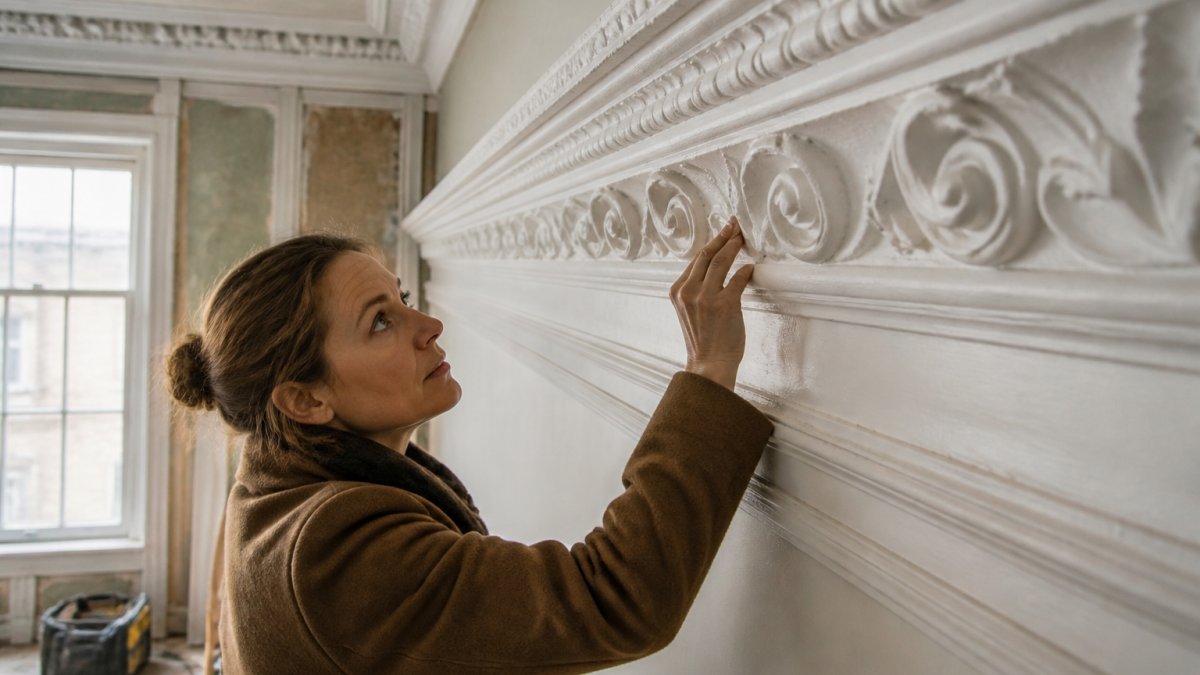
Walk through your home, photograph what you find, and note condition. Authentic original features are worth preserving if they can be restored properly. Replacements from later periods may be worth keeping if well-made and stylistically fitting, a quality Victorian fireplace in an Edwardian house, for example. Severely damaged features present a choice: a sash window with rotten frames may be beyond repair, while cornicing with missing sections can often be restored.
Prioritising by Significance and Visibility
Not all features matter equally. Front-facing features visible from the street carry more weight than hidden ones. Structural elements matter more than decorative ones.
Create a priority list:
| Priority Level | Examples | Action |
|---|---|---|
| Essential | Sash windows, fireplaces, cornicing | Restore where possible |
| Important | Timber floors, skirting boards, architraves | Restore if condition allows |
| Secondary | Ceiling roses, picture rails, door frames | Restore if budget permits |
| Lower | Internal finishes, minor trims | Consider replacement if damaged |
This framework stops you spending limited budgets on minor details while major features deteriorate.
Restoring Original Sash Windows
Sash windows define period homes. They’re also the first thing people notice. Restoring them properly transforms a property.
Repair Versus Replacement
Replacing sash windows with modern alternatives destroys period character, but repairing them demands skill and patience. A damaged sash window can almost always be repaired: rotten timber spliced, broken cords replaced, glazing resealed, draught-proofing added without removing the original frame.
Restoration Techniques and Materials
Proper sash restoration follows these steps:
- Remove the window sashes carefully
- Strip paint to reveal timber condition
- Splice or repair damaged timber sections
- Replace broken sash cords
- Reglaze with period-appropriate glass
- Repaint with breathable paint
- Reinstall and adjust for smooth operation
Use materials that match the original. Modern silicone sealants trap moisture behind original timber and cause rot; breathable paints and traditional glazing compounds work with period windows rather than against them.
How to Restore Original Timber Floors
Timber floors are among the most satisfying features to restore, durable when cared for, and adding warmth no modern floor achieves.
Assessment and Preparation
Start by understanding what you have. Victorian and Edwardian homes typically have softwood floors; Georgian properties may have hardwood, and species affects treatment. Check for cupped or warped boards, woodworm, and whether the wood is original or a later replacement.
Sanding, Treating, and Finishing
Professional sanding removes old finishes and levels uneven boards; most people hire specialists, as the equipment is expensive and mistakes costly. Sand progressively through grits, with dust extraction essential. Treat woodworm and damp before finishing. Finishing choices matter: wax creates depth and lets wood breathe, oil-based finishes are traditional, and modern polyurethane offers durability but changes appearance.
Restoring Fireplaces, Cornicing, and Decorative Details
These features create period atmosphere but are vulnerable to damage and inappropriate removal. The difference between sympathetic restoration and a botched job usually comes down to method, not budget.
A Feature-by-Feature Workflow
Every decorative feature follows the same four-stage process. Skipping a stage is how damage becomes irreversible.
1. Document. Photograph from multiple angles, measure profiles, note materials and record paint colours.
**2.
3. Repair. Match original materials and methods.
**4.
Fireplaces and Chimney Features
Fireplaces anchor rooms and define spaces, and restoring them is often transformative.
Restoration steps:
- Clear the opening and remove later infill carefully
- Sweep and CCTV-inspect the flue
- Repair or replace the register plate and any damper
- Repoint brickwork with lime mortar, not cement
- Restore or source a period-appropriate surround and insert
- Reinstate the hearth to current building regulations clearances
If the chimney is unsound, a gas fire insert can provide heat while preserving the surround. Avoid removing fireplaces entirely, even non-functional ones contribute to period character and property value.
Original cast-iron inserts can often be restored by specialist foundries. Reproduction surrounds are widely available but vary enormously in quality; compare profiles against your documented original before committing.
Cornicing, Plasterwork, and Ceiling Details
Cornicing defines period rooms, framing ceilings and adding visual richness. Common problems and their fixes:
- Hairline cracks, usually cosmetic; fill and redecorate
- Loose sections, reattach with plaster adhesive, not filler
- Missing runs, replace with a matching profile, salvaged or newly cast from a mould of the surviving section
Materials matter. Traditional plasterwork uses lime; modern gypsum-based fillers are harder, less breathable, and can crack surrounding original plaster as the building moves. Lime putty, haired lime plaster and traditional running moulds are correct for anything beyond cosmetic repair.
Skirting Boards, Architraves, and Timber Trims
These details frame spaces and connect rooms, and original timber trims are usually worth preserving. Assessment: check for rot at the base (common in skirting near damp walls), woodworm (small flight holes, frass), and paint build-up obscuring profile detail.
Repair approach:
- Cosmetic damage, dents and marks add character; leave them
- Localised rot, cut back to sound timber and splice in a matching section with a scarf joint
- Extensive rot, replace the run, matching species, profile and dimensions
Match timber species and profiles when replacing sections. Modern reproduction trims rarely match original work; a bespoke joinery workshop can run a knife to match an original profile exactly, worth the investment on visible runs.
When to Call in a Conservation Specialist
Some work sits firmly outside general builder territory:
- Any intervention on a listed building
- Structural timber repairs to principal beams or trusses
- Historic plasterwork with decorative schemes (frescoes, stencilling, graining)
A conservation-accredited professional, through the Institute of Historic Building Conservation or the RICS building conservation pathway, will specify methods that protect both the feature and your legal position.
The golden rule for decorative restoration: repair before replace, match materials rather than modernise, and keep every intervention reversible. Features that survive another century will do so because today’s work respected how they were originally made.
Period Home Renovation Mistakes to Avoid
Most renovation problems stem from a few common errors. Knowing them helps you avoid them.
Over-Modernising and Character Loss
The biggest mistake is chasing modern convenience at the expense of period character, open-plan living, minimal finishes and contemporary fixtures erase what makes period homes special. Period properties work differently: smaller rooms create intimacy, divided spaces provide flexibility, and original proportions feel right because they’re based on centuries of refinement.
Using Incompatible Materials and Methods
Modern materials don’t work in period homes: cement mortar cracks original brickwork, silicone sealants trap moisture, and modern paints prevent timber from breathing. Period-appropriate materials, lime mortar, breathable paints, traditional glazing compounds, cost more but perform better, working with your home rather than against it.
Skipping Professional Advice
Period property work isn’t DIY-friendly; mistakes are expensive and permanent. Hire specialists for structural work, sash windows, plasterwork and timber floors. Get multiple quotes, ask for references, and see previous work, period property specialists understand nuances general builders miss.
Balancing Period Character with Modern Living
You don’t have to choose between character and comfort. The goal is integration, not compromise.
Integrating Modern Amenities Discreetly
Modern kitchens and bathrooms are non-negotiable, but they can be designed to respect period character. Keep original features visible, work around fireplaces rather than removing them, preserve cornicing and ceiling details, and maintain room proportions. Contemporary cabinetry in muted colours fits better than bold designs, and integrated appliances disappear into the background.
Storage Solutions That Respect Architectural Character
Period homes lack modern storage, a genuine challenge, but solutions exist that don’t damage character. Fitted furniture can work if designed carefully: built-in wardrobes in bedrooms, shelving in alcoves, and understairs storage that adds function without visible impact.
Restoring original period features during renovation is an investment in your home’s future.
At Finest Furniture Studio, we understand how to integrate modern storage solutions into period homes without compromising character. Our bespoke fitted wardrobes and custom storage work within period architecture, not against it.
Frequently Asked Questions
How do you identify whether a feature in an old house is original?
Original features often show signs of age: hand-finished surfaces, period-appropriate materials, and wear patterns consistent with centuries of use. Look for inconsistencies in paint layers using a paint scraper, check whether timber grain and nail holes match the era, and compare details against architectural records or photographs of the property. A structural survey will help distinguish original elements from later additions. When in doubt, consult a conservation specialist, they can date materials and construction methods accurately.
Should you restore period features or replace them?
Repair and restoration preserve architectural authenticity and often cost less than full replacement. Restore when the original feature is structurally sound or repairable using conservation-grade materials. Replace only when damage is beyond safe repair, for example, severely decayed timber that cannot support its load, or sash windows with broken cords and rotted frames beyond restoration. Replacement should use period-appropriate materials and designs to maintain character. Professional assessment determines which approach suits each feature.
What are the most common mistakes when renovating a period home?
The biggest mistakes are over-modernising (removing original features to install contemporary fixtures), using incompatible materials (modern plasterboard instead of lime mortar, or non-period paint finishes), and rushing without professional survey or planning. Many homeowners also ignore building regulations and listed-status requirements, leading to costly corrections. Skipping specialist advice on hidden issues like structural movement, asbestos, or dry rot creates safety and budget problems. Plan thoroughly, consult specialists early, and prioritise features that define the property’s character.
How can you modernise a period home without losing its character?
Integrate modern amenities, heating, lighting, plumbing, behind the scenes or within period-appropriate casings. Use recessed lighting rather than surface-mounted fixtures, hide radiators in alcoves, and run wiring through existing cavities where possible. When adding storage, choose fitted solutions that respect room proportions and use timber finishes matching original trim. Maintain original features as focal points: keep fireplaces visible, restore sash windows rather than replacing them, and preserve cornicing and mouldings. This approach retains architectural character while meeting contemporary comfort standards.

