

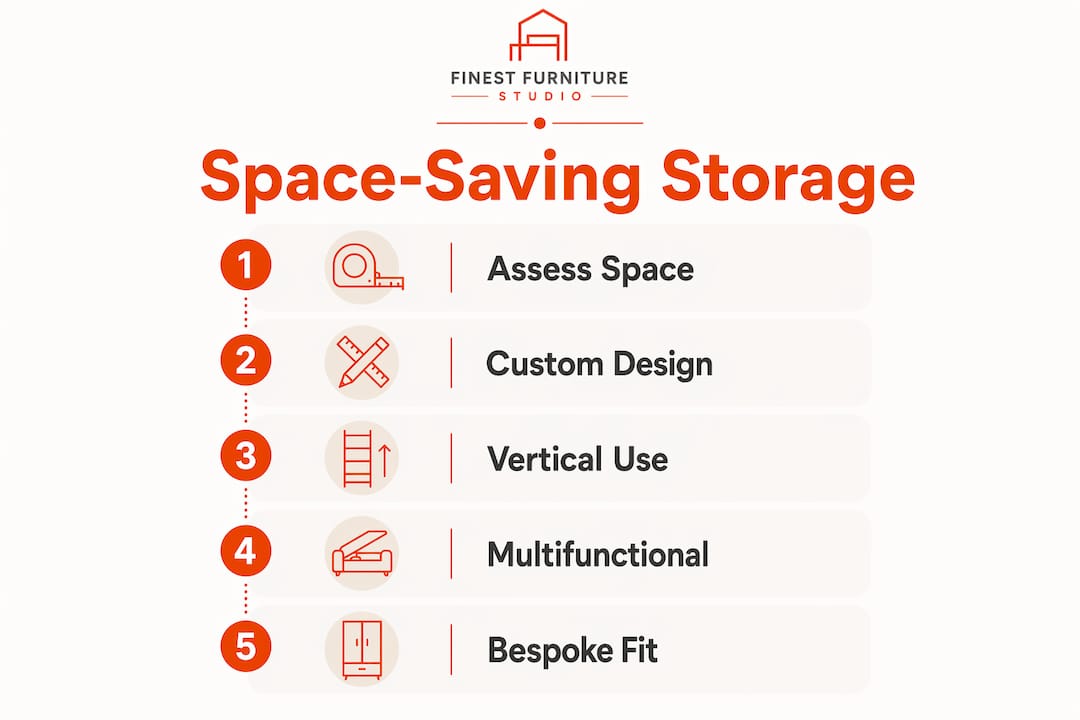
Space-saving storage is the intentional design and organisation of living spaces to maximise functionality by efficiently using every available square foot. It is not the same as minimalism. Space-saving is about efficient organisation with your belongings, not necessarily owning fewer of them. That distinction matters enormously for homeowners and renters who need their possessions close at hand but cannot afford to let clutter take over. The core techniques fall into three categories: vertical utilisation, multifunctional furniture, and hidden or bespoke storage. Finest Furniture Studio applies all three in its bespoke fitted wardrobes, loft wardrobes, and TV media walls across London and surrounding areas including Richmond, Wimbledon, Putney, and Chiswick.
What is space-saving storage and why does it differ from minimalism?
Space-saving storage maximises usable square footage using vertical, multifunctional, and hidden storage techniques. The goal is functional optimisation, not a stripped-back aesthetic. A family in a three-bedroom terrace in Fulham still needs school bags, sports equipment, winter coats, and a full wardrobe. Space-saving design finds a place for all of it without the home feeling crowded.
Minimalism asks you to own less. Space-saving design asks you to store better. The two approaches can coexist, but they are not the same thing. Confusing them leads homeowners to discard items they later need to repurchase, which costs money and creates waste.
The practical result of good space-saving design is a home that feels larger and functions more smoothly. Rooms appear brighter when floor space is clear. Daily routines become faster when everything has a logical, accessible home.
How does vertical utilisation transform storage in compact homes?
Vertical utilisation is the practice of using wall height rather than floor area for storage. Wall-mounted shelves, pegboards, and racks free the floor entirely and visually enlarge a room by drawing the eye upward. This is one of the most cost-effective changes any homeowner or renter can make.
Common vertical storage applications include:
- Over-toilet shelving in bathrooms, which uses an area that is almost always wasted
- Full-height bookcases that run floor to ceiling, doubling or tripling shelf capacity compared to standard units
- Wall-anchored clothes racks in bedrooms and utility rooms, keeping garments accessible without consuming floor space
- Pegboards in kitchens for pots, pans, and utensils, freeing up cupboard space for bulkier items
- Tall fitted wardrobes that reach the ceiling, capturing the often-ignored zone above a standard wardrobe rail
The visual effect is significant. A room with clear floors and well-organised walls reads as larger and more considered than one where furniture clusters at waist height.
Vertical storage activates under-utilised dead space such as areas behind doors and above doorways. These zones are present in virtually every home yet rarely used. A shallow shelf above a doorway can hold books, baskets, or seasonal items without intruding on the room at all.
Pro Tip: Fit a row of hooks or a slim shelf to the back of every interior door in your home. In a typical three-bedroom house, that creates six to eight new storage zones without touching a single wall surface.
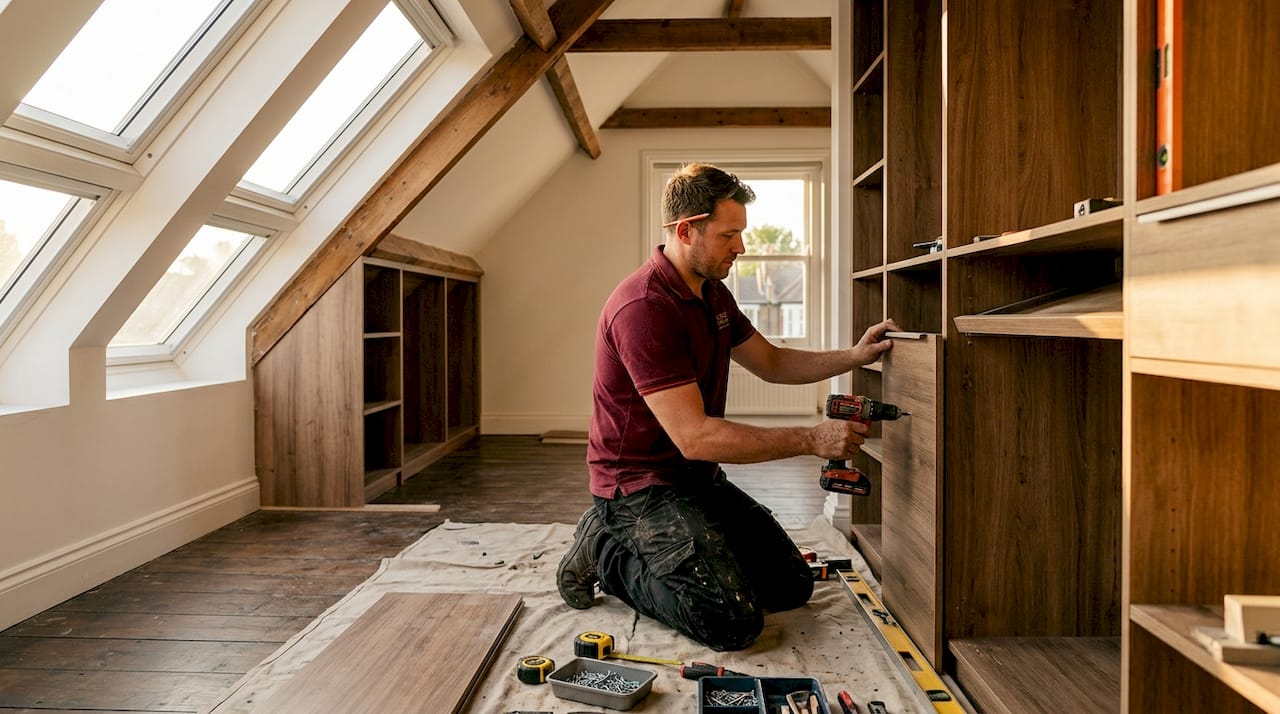
Fitted wardrobes that run floor to ceiling are the most effective vertical storage solution for bedrooms. Finest Furniture Studio designs and installs bespoke fitted wardrobes that use every centimetre of wall height, including in loft rooms with sloped ceilings where standard furniture simply cannot fit.
Multifunctional furniture: combining form and function to save space
Multifunctional furniture combines multiple roles into a single piece, reducing the total number of items a room needs. Sofa beds, storage ottomans, and foldable tables are the most familiar examples, and their popularity in urban centres reflects a genuine shift in how people think about home design. A storage ottoman replaces both a coffee table and a blanket box. A foldable dining table disappears against a wall when not in use, returning the floor to the living area.
The benefits extend beyond saving space:
- Reduced visual clutter. Fewer pieces of furniture mean fewer surfaces collecting dust and disorder.
- Flexibility. A sofa bed converts a study into a guest room without requiring a permanent second bed.
- Style integration. Well-designed multifunctional pieces look intentional rather than improvised.
- Long-term value. A quality piece that serves two or three functions costs less over time than buying separate items for each role.
Custom fitted furniture takes this principle further. A bespoke media wall, for example, combines a TV unit, concealed cable management, open display shelving, and closed storage for games consoles, routers, and DVDs into a single wall-length installation. Nothing sits on the floor. Nothing clutters the room. Finest Furniture Studio designs and fits media walls with storage across London, including in Chelsea, Hammersmith, and Ealing.
Wall-mounted solutions that fold flat when not in use, such as fold-down drying racks or Murphy-style desks, represent the most space-efficient end of the multifunctional spectrum. They are particularly effective in studio flats and one-bedroom apartments where every square metre counts.
Pro Tip: Before buying any new piece of furniture, ask whether it can serve two functions. If it cannot, look for a bespoke alternative that can be built to do exactly what you need in the exact space you have.
Sustainability is another argument for quality multifunctional and fitted furniture. Investing in high-quality adaptable furniture reduces waste and saves money compared to repeatedly replacing cheaper, single-purpose items. A bespoke fitted wardrobe installed by Finest Furniture Studio carries a 10-year quality guarantee and is built to last the lifetime of the home.
Hidden and bespoke storage solutions for maximising every inch
Hidden storage uses areas that most homeowners overlook entirely. Under-bed drawers, toe-kick storage, and recessed niches minimise visible clutter and reduce cleaning effort by keeping surfaces clear and tidy. These solutions deliver a luxury aesthetic because nothing is on show unless you choose it to be.
The most productive hidden storage zones in a typical home are:
| Storage zone | Practical use |
|---|---|
| Under-bed space | Seasonal clothing, bedding, suitcases in fitted drawers |
| Toe-kick areas beneath kitchen units | Flat items, baking trays, cleaning supplies |
| Above doorways | Books, baskets, rarely used items on slim shelves |
| Between wall studs | Recessed shelving for toiletries, spices, or books |
| Under-stair space | Full fitted cupboards, pull-out drawers, or a home office |
| Loft eaves | Bespoke angled wardrobes fitted to the slope of the roof |
Bespoke fitted furniture is the most effective way to unlock these zones. Standard off-the-shelf furniture cannot adapt to a sloped loft ceiling, an alcove with non-standard dimensions, or the space beneath a staircase. Custom-built storage that utilises architectural features like loft slopes or under-stair spaces significantly increases usable floor area compared to standard furniture.
Finest Furniture Studio specialises in exactly these situations. The team designs bespoke furniture for awkward corners and unusual architectural features across London, including loft conversions in Ealing, alcove wardrobes in Richmond, and under-stair solutions in Wimbledon and Kingston.
Pro Tip: Measure the toe-kick space beneath your kitchen units. Most kitchens have 10–15 centimetres of unused depth running the full length of the room. Fitted pull-out drawers in this zone can store flat baking trays, chopping boards, and cleaning supplies without touching a single cupboard.
The long-term value of bespoke hidden storage is clear. It is built once, built correctly, and built to fit. There is no need to replace it as your needs change because a well-designed bespoke piece adapts with you.
Creative storage ideas and strategies to reduce clutter
Creative storage ideas work best when they address the specific habits and routines of the people living in a home. A solution that works for a family of four in Barnes will differ from what suits a single professional renting a studio in Brixton. The principle, however, is consistent: every item needs a designated home, and that home should be as close as possible to where the item is used.
Integrated space-saving storage reduces stress by creating a clean, uncluttered environment linked to better daily functionality. The psychological benefit is real. A tidy home is easier to maintain, faster to clean, and more pleasant to spend time in. Closed storage, in particular, keeps spaces looking ordered even when life is busy.
Here are the most effective everyday storage strategies:
- Audit before you organise. Empty each storage area completely, then return only what you genuinely use. This reveals how much space you actually have.
- Group by frequency of use. Items used daily go at eye level and arm’s reach. Seasonal or rarely used items go high or deep.
- Use the back of every door. Hooks, over-door organisers, and slim shelves turn dead surfaces into active storage.
- Decant and label. Uniform containers stack more efficiently than original packaging and make contents visible at a glance.
- Go vertical in every room. Shelving above desks, beds, and sofas adds storage without reducing floor space.
- Reassess every six months. Storage needs change as households change. A system that worked last year may need adjusting now.
- Invest in fitted solutions for permanent rooms. Bedrooms, hallways, and living rooms benefit most from built-in storage because the furniture stays even when you redecorate.
Treating storage solutions as multipurpose design elements unlocks flexibility and reveals overlooked opportunities. A hallway bench with lift-up storage, for example, solves three problems at once: seating, shoe storage, and a surface for keys and post.
Clean, organised homes enabled by space-saving storage lead to mental clarity and improved daily functionality. This is not a lifestyle claim. It is a practical observation: when you know where everything is, you spend less time looking for things and more time doing what matters.
Key takeaways
Bespoke fitted storage, vertical utilisation, and multifunctional furniture are the three most effective methods for maximising usable space in any home, regardless of size.
| Point | Details |
|---|---|
| Space-saving is not minimalism | It is about organising what you own efficiently, not owning less. |
| Vertical space is the most underused resource | Wall height, door backs, and above-doorway zones add storage without touching the floor. |
| Multifunctional furniture reduces item count | One piece serving two or three roles cuts clutter and saves money over time. |
| Bespoke storage unlocks awkward zones | Loft slopes, alcoves, and under-stair spaces need custom-built solutions to work properly. |
| Organisation needs regular reassessment | Storage systems should be reviewed every six months as household needs change. |
Why I think most homeowners are solving the wrong storage problem
By Aureliu
Most homeowners I speak to believe their problem is a lack of space. After years of working on fitted wardrobes and bespoke storage projects across London, I am convinced the real problem is almost always a lack of structure.
The homes I visit in Putney, Twickenham, and Chelsea are not too small. They have loft eaves that nobody has touched, alcoves that hold a single shelf when they could hold a full fitted wardrobe, and hallways where coats pile on a single hook because nobody has installed a proper fitted unit. The space is there. It just has not been designed.
The second misconception I encounter regularly is that bespoke storage is a luxury. It is not. A fitted wardrobe built to fill an alcove from floor to ceiling costs less per year than the rotating cycle of flat-pack furniture that most homeowners buy, discard, and replace every few years. The long-term value of bespoke furniture is measurable in both money and quality of life.
The third thing I have learned is that style and function are not in tension. The most beautiful rooms I have seen are also the most organised. When storage is built in and well-designed, it disappears into the architecture of the home. The room looks intentional. That is what bespoke fitted furniture does that no flat-pack solution can replicate.
— Aureliu
Bespoke fitted wardrobes from Finest Furniture Studio
Finest Furniture Studio designs and installs bespoke fitted wardrobes, loft wardrobes, and TV media walls across London and the surrounding areas, including Richmond, Wimbledon, Putney, Chiswick, and Ealing. Every project begins with a free design visit, where we assess your space, discuss your needs, and produce a tailored solution that fits your home precisely.
Our fitting teams complete most installations within 7–12 days, and every piece carries a 10-year quality guarantee. We also remove and dispose of your old wardrobe at no extra charge. For homeowners in West London, our bespoke wardrobes West London guide covers every option in detail. Call us on 07468 150807, message us on WhatsApp, or visit us at 124 City Road, Kemp House, London, EC1V 2NX to book your free design visit.
FAQ
What is space-saving storage in simple terms?
Space-saving storage is the practice of organising a home to maximise usable space using vertical shelving, multifunctional furniture, and hidden storage solutions. The goal is better functionality, not fewer possessions.
Why are space-saving solutions worth investing in?
Well-designed space-saving solutions reduce clutter, improve daily routines, and make a home feel larger and more comfortable. Bespoke fitted options also add long-term value to the property.
What is the difference between space-saving storage and minimalism?
Space-saving storage focuses on organising what you own efficiently. Minimalism focuses on owning less. You can use space-saving techniques without discarding a single item.
Which rooms benefit most from fitted storage solutions?
Bedrooms, hallways, and living rooms benefit most because these are the rooms where clutter accumulates daily. Loft rooms with sloped ceilings also gain significantly from bespoke fitted wardrobes.
How quickly can Finest Furniture Studio install a fitted wardrobe?
Finest Furniture Studio completes most fitted wardrobe installations within 7–12 days of the design being confirmed, including removal and disposal of any existing wardrobe.

