
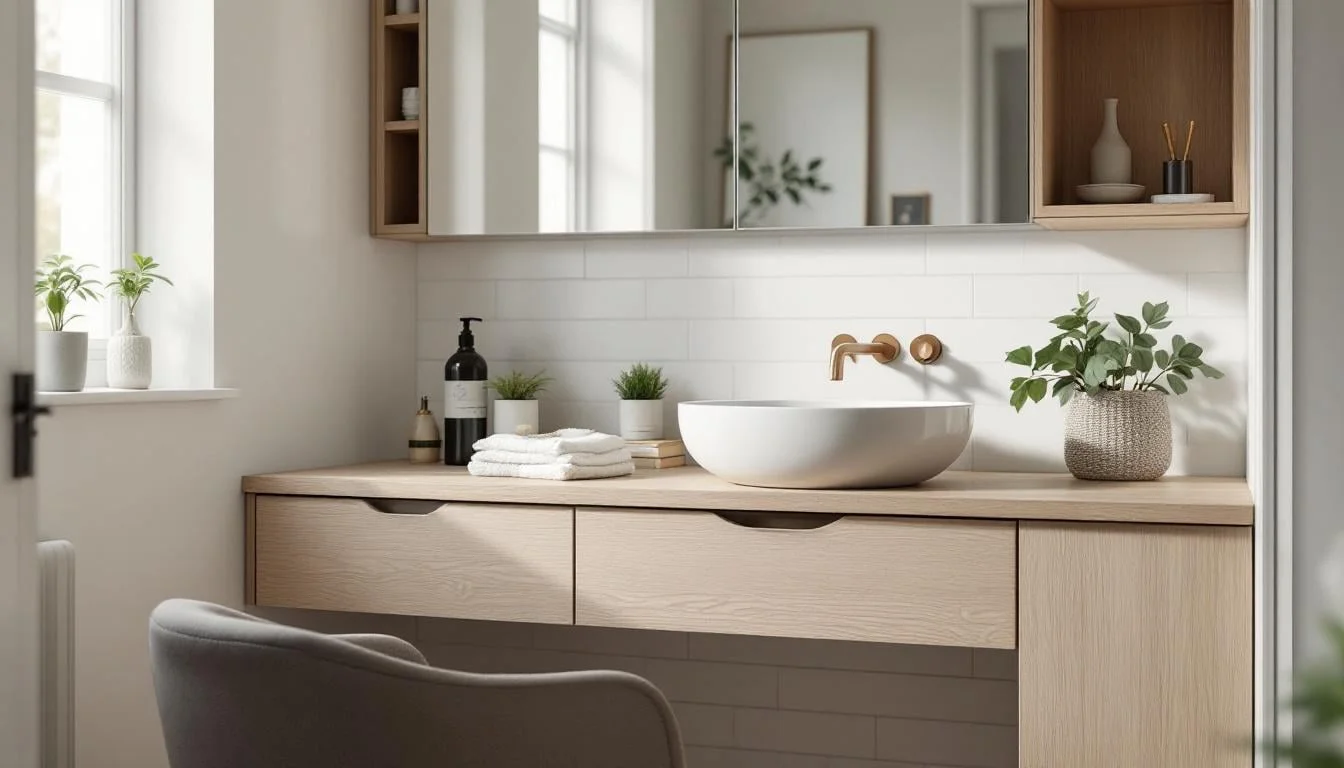
Why bathroom storage matters in West London homes
Bathroom storage is often the difference between a room that feels calm and one that feels crowded. In West London homes, where bathrooms can be compact, awkwardly shaped, or split around pipework, storage has to do more than hide toiletries. It needs to work around the room’s footprint, support daily routines, and still look intentional. If you are planning bespoke wardrobes West London homeowners can use elsewhere in the home, the same thinking applies here: measure first, then design around the real constraints, not an idealised plan.
How the top-ranking advice is structured
The strongest search results around bathroom storage usually cover three things: space-saving layouts, moisture-resistant materials, and fitted solutions that make small rooms feel larger. Competitor pages from premium fitted-furniture brands tend to focus on wardrobes, storage systems, and bespoke joinery, but they often treat bathroom storage as a style issue rather than a workflow issue. The better angle is practical: define what must be stored, where steam and splash zones sit, and how often each item is used. That framing leads to better bathroom storage and more usable fitted furniture overall.https://tile.co.uk/pages/tile-trends
Start with a use-case map, not a cabinet sketch
The quickest way to design better bathroom storage is to list what actually lives in the room. Separate daily items, weekly items, and backup supplies. A common mistake is to size the vanity around cosmetics or towels alone, then discover there is no space for cleaning products, spare toilet rolls, or hair tools. A good rule is to reserve 60 to 70 percent of accessible storage for items used every day, because bathroom clutter grows fastest when the most-used products are hard to reach.
Measure the room the way a fitter would
Precise measurement matters more in bathroom storage than in many other rooms because pipework, skirting, tile returns, and door swing can steal usable millimetres. Measure wall-to-wall, floor-to-ceiling, and the depth around radiators, basins, and soil stacks. Then record the service zones that cannot be blocked. In fitted furniture projects, a 10 mm error can force an awkward filler strip or reduce shelf depth enough to make tall bottles unstable. That is why bespoke wardrobe planning habits translate well into bathroom storage planning.
Identify the three storage zones
A practical bathroom storage layout usually has a high zone, a mid zone, and a low zone. The mid zone should hold items you reach for every day, such as hand towels, skincare, and spare soap. The low zone can carry heavier items like cleaning products or bulk supplies. The high zone is best for seasonal items or anything you want to keep out of sight. This simple zoning approach reduces search time and cuts the chance of overfilling a single cupboard.
Materials that hold up in humid rooms
Bathroom storage fails when the wrong materials are used. Veneered boards, moisture-resistant MDF, sealed hardwood accents, and quality laminates all behave differently in steam and splash conditions. The decision is not just about looks, it is about maintenance. If a family bathroom sees daily showers, choose finishes with sealed edges and hardware designed for humid spaces. A decorative front is only useful if the carcass, hinges, and handles can survive repeated exposure without swelling, peeling, or loosening.
Where bespoke design beats off-the-shelf units
Off-the-shelf storage works when the room is simple and the need is basic. Bespoke bathroom storage earns its keep when the room has slopes, alcoves, tight corners, or mixed-use requirements. In a West London property, that often means using the full wall height, building around an awkward recess, or aligning storage with existing architectural lines. The trade-off is lead time and cost, but the gain is measured in usable capacity. A well-fitted unit can recover dead space that flat-pack furniture leaves untouched.
Built-in details that improve daily use
The details that matter most are the ones you feel every day. Soft-close doors reduce impact in narrow rooms. Pull-out shelves make deep cupboards more usable. Internal dividers stop shared storage from turning into a catch-all. If the bathroom is used by more than one person, dedicate separate compartments for each user and one neutral overflow area. That small decision reduces friction more than adding another shelf, because it gives each person a predictable place to put things back.
Mini-case: a compact family bathroom
A small family bathroom can change quickly when storage is planned around routine rather than appearance. One household, using a room with limited wall depth, replaced a shallow freestanding unit with fitted bathroom storage that ran floor to ceiling. The assumption was simple: if every item had a zone, the room would feel larger. After the change, the family reduced countertop clutter and freed enough floor space to make cleaning easier, which mattered more than adding another decorative feature.
Use vertical space without making the room feel heavy
Vertical storage is one of the strongest tools in smaller bathrooms, but it has to be handled carefully. Tall cabinets can look bulky if they are too deep or too dark. A better approach is to keep the visual line light, align storage with existing trims, and use a mix of closed and open sections. If you need a design rule, limit deep upper storage to items used less than once a week. That keeps the room from feeling top-heavy while still expanding capacity.
Mirror fronts and light finishes can do double duty
Mirror-fronted bathroom storage is useful when the room needs both reflective light and extra function. It works especially well above a basin or in a narrow room with limited daylight. Pale finishes, matte lacquers, and subtle timber tones tend to feel calmer than high-gloss surfaces in busy family bathrooms. The trade-off is maintenance, because reflective fronts show fingerprints more easily. If the household wants a low-fuss finish, choose a textured or satin surface and reserve mirrors for the most practical doors.
How fitted furniture supports small-space organisation
Bespoke wardrobes West London homeowners commission often solve one problem: make storage fit the room exactly. Bathroom storage is no different. The advantage of fitted furniture is that it can be designed around exact bottle heights, towel widths, and awkward pipe positions. That is useful in a room where 150 mm of wasted depth can mean the difference between a shelf that works and a shelf that becomes dead space. For more tailored planning, visit Finest Furniture Studio to explore fitted solutions that match the room, not the other way around.
Workflow: from survey to fitting
A clean bathroom storage project follows a simple workflow. First, survey the room and mark immovable elements. Second, define the storage inventory and user priorities. Third, choose materials based on humidity and cleaning habits. Fourth, confirm clearances for doors, drawers, and handles. Fifth, approve the final layout before fabrication. If the project is well managed, fitting can often be scheduled in days rather than weeks, but only when the measurements and finish choices are locked early. This prevents delays and avoids the expensive rework that comes from late changes.
Mini-case: a sloped ceiling and a practical fix
A loft bathroom with a sloped ceiling often creates storage that looks impossible at first glance. In one anonymous project, the lowest section was too shallow for standard cabinetry, so the design shifted to staggered shelving and a custom cupboard under the highest usable point. The result was less wasted space and better access to daily items. The key lesson is that awkward rooms rarely need more furniture, they need furniture placed where standing height, reach depth, and door clearance all overlap.
Common mistakes that hurt bathroom storage
The most common mistake is over-sizing storage for the room. A cupboard that blocks movement is not useful, even if it adds capacity. Another issue is ignoring cleaning access, which leaves dead corners behind sinks and around pipework. A third mistake is mixing too many open shelves with too little containment, because bathrooms generate visual clutter quickly. The fix is to plan for 80 percent closed storage and 20 percent display storage in busy homes, then adjust upward if the room is used more for guest presentation than daily family use.
What to ask before you commission fitted storage
Before ordering bathroom storage, ask how the unit will be protected at the edges, how ventilation will be maintained, and how the doors will cope with condensation. Ask whether the internal layout can be adjusted if your toiletries change over time. Also check whether the fitting timeline fits your wider project schedule. In a renovation, lead times matter because one delayed unit can hold up decorating, tiling, or plumbing finalisation. Practical questions like these prevent surprises and keep the project moving.
Quick takeaways for planning bathroom storage
Bathroom storage works best when it is planned around routine, not decoration. Bespoke solutions are most valuable in awkward or compact West London rooms. Humidity-resistant materials and sealed edges matter as much as the visible finish. Vertical storage helps, but only when it does not make the room feel heavy. Good fitted furniture should recover dead space, improve access, and reduce daily clutter. If you are comparing options, the best test is simple: does the layout make the room easier to use in the morning and easier to clean at night?
Why this approach works for West London homes
West London properties often combine period features, irregular dimensions, and strong expectations around finish quality. That combination makes bathroom storage a design-and-function problem, not a shopping exercise. The practical edge comes from fitting around the room’s structure and the household’s habits at the same time. If you are exploring bespoke wardrobes West London style homeowners appreciate, the same discipline applies here: use the room’s shape, not just its style, to decide what gets built. For tailored planning and a clear next step, explore Finest Furniture Studio and request a design conversation that starts with the actual room.
Frequently Asked Questions
How does bathroom storage differ from standard fitted furniture?
Bathroom storage needs moisture-resistant materials, tighter clearances, and a layout that supports daily routines in a humid room. Unlike standard fitted furniture, it has to account for steam, splash zones, and easy cleaning access.
What is the best bathroom storage for small West London homes?
For small West London homes, the best bathroom storage usually combines wall-height cabinetry, mirror fronts, and internal dividers. A fitted layout often works better than freestanding units because it uses awkward space more efficiently.
Can bespoke wardrobes West London style planning be used for bathroom storage?
Yes, the same planning logic applies. Measure accurately, map the storage zones, and design around the room’s fixed constraints first, then choose finishes and door styles that suit the space.
What materials are best for bathroom storage in humid rooms?
Moisture-resistant MDF, sealed laminates, and well-finished edge banding are common choices for bathroom storage. The best material depends on how often the room is used and how close the unit sits to showers or basins.
How do I avoid clutter in fitted bathroom storage?
Start by separating daily items from backup items and assign each group a specific zone. Internal organisers, pull-out shelves, and closed compartments usually work better than open shelving in busy family bathrooms.
How quickly can fitted bathroom storage be installed?
Timelines vary by design complexity, but a well-prepared project can move quickly once measurements and finishes are approved. If you are comparing fitted wardrobes and bathroom storage, ask early about fabrication and fitting windows to avoid delays.https://www.sanctuary-bathrooms.co.uk/furniture/modern?p=all
What should I ask before ordering bespoke bathroom storage?
Ask how the unit handles humidity, how it will be cleaned around the edges, and whether the layout can adapt if your storage needs change. It is also worth confirming fitting dates early if the room is part of a larger renovation.https://www.drench.co.uk/c/furniture

