
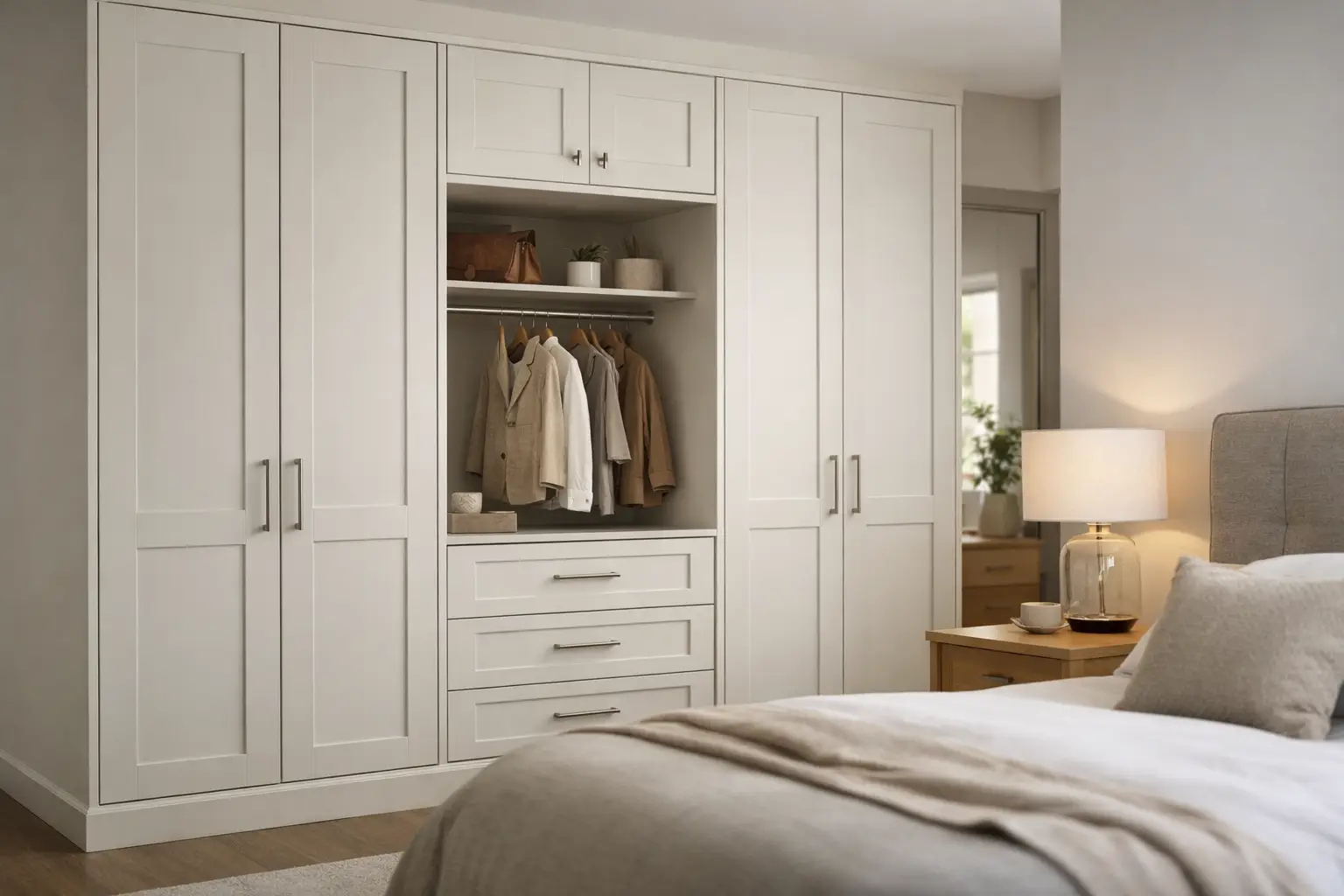
A shaker fitted wardrobes review should start with the question most homeowners are really asking: will this style still look right in five or ten years, once the paint has settled into daily life and the storage is being used properly? That is exactly where shaker wardrobes tend to do well. They are one of the few fitted furniture styles that feel classic without looking old-fashioned, and tailored without feeling fussy.
For many homes, especially period houses, loft conversions and carefully renovated family properties, shaker doors offer a calm middle ground. They are more architectural than plain slab fronts, but far less ornate than traditional panelled joinery. That balance is a large part of their appeal. The other part is practical – shaker fitted wardrobes work across awkward alcoves, full wall runs and sloping ceilings without losing their sense of proportion.
Shaker fitted wardrobes review – what defines the style?
At its core, the shaker look is simple framed cabinetry. A flat central panel sits within a clean border, creating depth and structure without heavy decoration. In fitted wardrobes, that means doors with just enough detail to add character, especially across larger bedroom elevations where plain doors can sometimes feel too flat.
This matters more than it may seem on paper. A full-height fitted wardrobe can dominate a room, particularly in bedrooms where wall space is limited. Shaker detailing softens that effect. It gives the eye something to read, which helps larger installations feel intentional rather than bulky.
That said, not all shaker wardrobes are equal. The proportions of the frame, the finish quality, the paint tone and the handle choice all affect the final result. A slim shaker frame can read as modern and understated, while a chunkier profile leans more traditional. If you are trying to tie new wardrobes into existing skirting, cornicing or a Victorian fireplace, those subtleties matter.
Where shaker wardrobes work best
Shaker fitted wardrobes are especially strong in homes where you want storage to feel built into the architecture. In alcoves beside a chimney breast, they tend to look natural rather than added on later. Across an entire bedroom wall, they can create a tailored, furniture-like appearance that still feels quiet.
They also suit homes with mixed design influences. A lot of London properties now blend period bones with cleaner contemporary finishes. Shaker doors bridge that gap well. They can sit comfortably with parquet flooring, soft neutral walls and more modern lighting, which makes them a flexible choice for long-term interior schemes.
There are, however, rooms where another style may work better. In a very minimal new-build, ultra-flat slab doors can sometimes look sharper. In a compact bedroom with very little natural light, heavily detailed shaker frames in a dark colour might feel busier than necessary. The best choice depends on the room, not just the trend.
Finish and colour make a bigger difference than most people expect
In any honest shaker fitted wardrobes review, finish deserves as much attention as design. Shaker doors rely on crisp lines. If the workmanship is poor, the whole look suffers quickly. Uneven gaps, rough paint edges or badly aligned frames are far more obvious on shaker fronts than on simpler doors.
Colour also shifts the mood. Soft whites, warm greys, taupes and muted greens tend to suit shaker cabinetry because they support the timeless feel of the design. Stronger colours can work beautifully too, but they need confidence and a room scheme to match. In smaller bedrooms, lighter shades usually help the fitted run feel elegant rather than dominant.
Storage performance – this is where fitted matters
Style gets the attention, but storage is where fitted wardrobes justify their cost. A shaker front on a freestanding wardrobe gives you the look. A bespoke fitted wardrobe gives you the look and the room back.
Because the cabinetry is made to measure, it can run floor to ceiling and wall to wall, using space that freestanding furniture leaves wasted. That is especially valuable in older properties where walls are not perfectly square, ceilings slope, or alcoves are uneven. The real advantage is inside. Hanging sections, shelves, drawers, shoe storage and overhead compartments can all be planned around how you actually live.
This is often where homeowners see the difference between attractive joinery and genuinely useful furniture. If two people are sharing the same room, for example, one side can be arranged with long hanging for dresses and coats while the other prioritises double hanging and drawer space. Children’s bedrooms, guest rooms and loft rooms all ask for slightly different internal layouts, and fitted shaker wardrobes adapt well to that.
Hinged doors versus sliding options
Shaker styling is most often paired with hinged doors, and that remains the strongest aesthetic version. Hinged fronts show the frame detail properly and suit a more classic fitted look. They also allow full access to the wardrobe interior.
The trade-off is clearance. You need enough space in front of the wardrobe for the doors to open comfortably. In tighter rooms, sliding wardrobes may be more practical, but shaker styling on sliding doors needs careful handling. It can work, though it generally looks less authentic than hinged cabinetry.
Cost – are shaker fitted wardrobes good value?
A shaker fitted wardrobes review would be incomplete without talking about price, because this is where expectations can drift. Shaker wardrobes are not usually the cheapest fitted option. The framed door design adds labour, precision and finishing work, and bespoke installation always costs more than buying modular furniture.
Even so, value should be judged over time. A well-made fitted wardrobe can outlast several rounds of freestanding furniture, improve daily storage, and lift the overall feel of the room. For homeowners investing in extensions, loft conversions or full bedroom refurbishments, fitted shaker wardrobes often make sense because they complete the space properly rather than acting as a temporary compromise.
Budget still matters, of course. Internal fittings, painted finishes, mirrored panels, integrated lighting and height all influence the final figure. One of the most sensible ways to manage cost is to focus spending where it has the biggest effect – strong carcass construction, well-made doors, a practical interior and professional installation. Decorative extras can be adjusted if needed.
What to check before you choose shaker fitted wardrobes
The style is forgiving in terms of décor, but the execution needs to be exact. Before committing, look closely at the proportions of the door frames, the consistency of the finish and how the wardrobes meet the walls, ceiling and skirting. Good fitted furniture should feel settled into the room, not simply pushed against it.
It is also worth thinking beyond the front doors. Ask how the interiors will be planned, whether the wardrobe will include top boxes, and how the design deals with obstacles such as sockets, chimney breasts or uneven ceilings. A beautiful exterior with a generic interior can be a missed opportunity.
Homeowners often underestimate installation quality too. Fitted wardrobes are only as good as their final fit. Clean scribing, neat lines and careful adjustment are what make bespoke furniture look premium. If the process is well managed, the room feels transformed quickly rather than disrupted for weeks.
Are shaker wardrobes likely to date?
Probably less than most other wardrobe styles. That does not mean they are immune to fashion, but they are anchored in proportion and craftsmanship rather than novelty. If you choose a sensible colour and avoid overly trend-led handles or finishes, shaker wardrobes tend to age well.
This is one reason they are so popular in homes where owners want quality without having to revisit the design decision in a few years. They give enough detail to feel designed, yet not so much that they tie the room to a very specific era.
Final verdict in this shaker fitted wardrobes review
Shaker fitted wardrobes earn their reputation because they manage to be both attractive and useful. They suit a wide range of homes, they work particularly well as bespoke joinery, and they offer a style that feels established rather than fashionable. When designed properly, they can make a bedroom feel calmer, better organised and more expensive in the best sense of the word.
They are not automatically the right answer for every room. If your interior leans very contemporary, or your budget is tight enough that bespoke details would compromise build quality elsewhere, a simpler design may be the better decision. But for homeowners who want fitted storage with warmth, structure and lasting appeal, shaker wardrobes remain one of the strongest choices available.
If you are comparing styles for a renovation or bedroom update, the smartest approach is to judge shaker wardrobes not just by the door design, but by how well they will serve your room every day. The best fitted furniture is the kind you notice once for its beauty and then appreciate for years because it simply works.

