
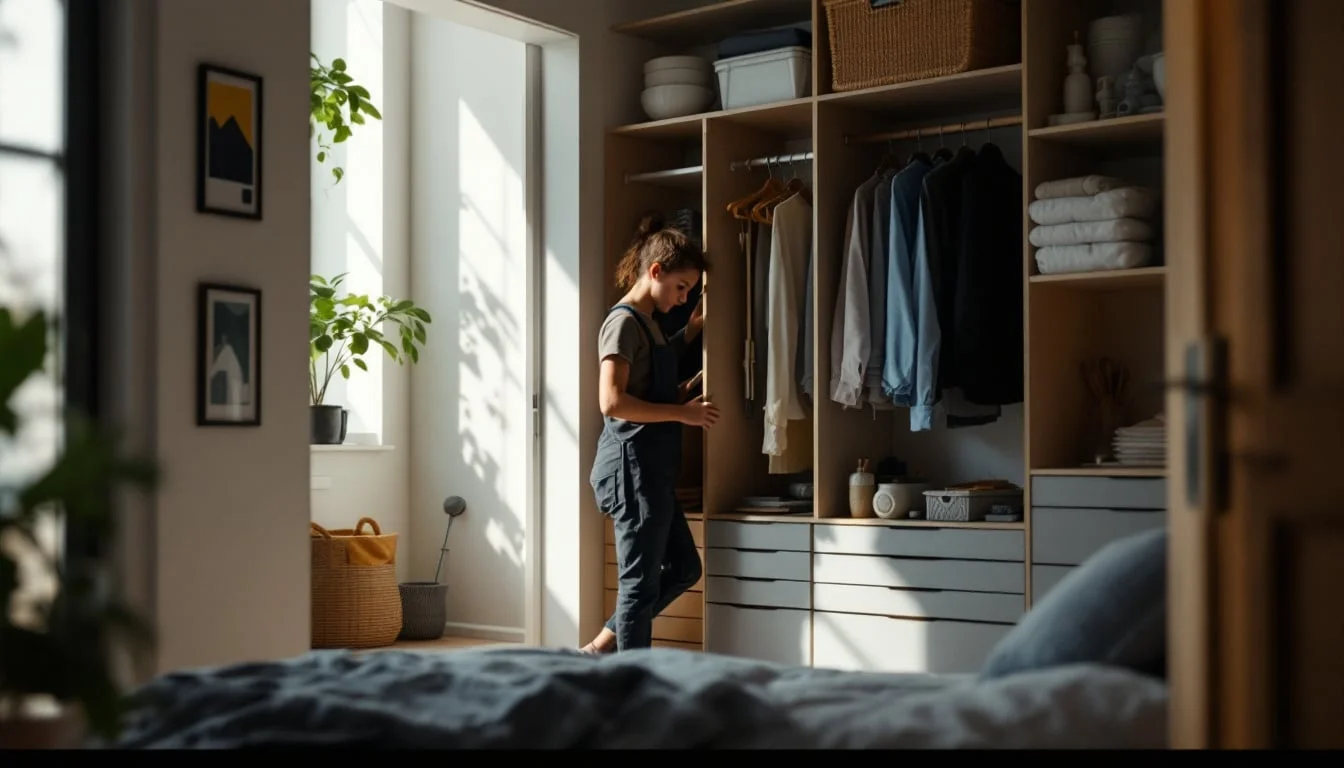
Teen wardrobes only work when the layout matches daily habits
Teen wardrobes get messy for one simple reason: they are often designed like mini adult wardrobes, even though teen routines are much less predictable. School clothes, sports kit, hoodies, uniforms, bags, and seasonal layers all compete for the same space. If you want a wardrobe that stays usable, the first step is not buying more storage, it is matching the layout to what gets used every day.
Start with a quick storage audit
Before planning teen wardrobes, spend 15 minutes sorting items into four groups: hanging, folded, shoes, and bulky extras. This gives you a realistic picture of whether the problem is space, access, or habit. A wardrobe can look large and still fail if the hanging rail is too low or if shelves are too deep for folded clothes. The practical test is simple, if your teen can put laundry away in under two minutes, the system is probably workable. If it takes longer, the layout is already fighting the routine.

The best teen wardrobe layouts are simple, not packed
The strongest teen wardrobes usually follow a clean split between short hanging, open shelving, and drawer space. Short hanging handles shirts, uniforms, dresses, and jackets without wasting vertical room. Shelves are better for jumpers, jeans, and sports layers, but only if they are not overloaded. Drawers are the pressure release valve for smaller items such as socks, underwear, and accessories, because they hide visual clutter and stop piles from sliding around. For most rooms, a balanced mix works better than a wardrobe full of one storage type.
Use zones instead of one large storage area
A useful way to plan teen wardrobes is to divide them into daily, weekly, and seasonal zones. Daily items should be easiest to reach, weekly items can sit lower or higher, and seasonal items can go in the least accessible space. This reduces the habit of shoving everything into the front of the wardrobe. One overlooked benefit is that a zone-based layout makes tidying faster, because every item has a clear home rather than living in a general pile.
How to maximise storage without creating visual clutter
The main challenge with teen wardrobes is not storage capacity alone, it is keeping the room calm enough that the system is actually used. Open shelves can look tidy on day one and chaotic by day ten if they are overfilled. Closed storage, such as drawers and fitted doors, hides mess better, but it only works when the inside is organised properly. The smartest approach is to use a few open areas for active items and keep the rest behind doors. If every item is visible, clutter becomes part of the room’s appearance rather than just a storage problem.
Use the 80 percent rule for shelves and rails
One practical rule for teen wardrobes is to keep shelves and rails around 80 percent full, not 100 percent. That spare space makes it easier to put things away quickly, and it prevents clothes from being crushed or forgotten at the back. Overfilling is one of the fastest ways to make fitted wardrobes feel smaller than they are. If space is tight, it is better to reduce the number of categories stored in the wardrobe than to squeeze every centimetre with no breathing room.
Choose storage accessories that stop pile-up
Drawer dividers, pull-out baskets, and shelf inserts are small additions that make a big difference in teen wardrobes. They stop loose items from drifting into one mixed pile, which is usually where clutter starts. A divider system is especially useful for smaller bedrooms, because it creates structure without needing more furniture. The trade-off is that accessories take a little upfront planning, but that cost is lower than replacing a wardrobe later because the original layout was too rigid.
Doors matter more than most people expect
Wardrobe doors are not just a style choice, they affect how easy the room is to use. In a smaller bedroom, sliding doors reduce the space needed to open the wardrobe, which helps if the bed or desk sits close by. Hinged doors are better if you want full access to the interior at once, especially when folding clothes or sorting outfits. For teen wardrobes, the right door choice often comes down to room depth and how much floor space you can give up in front of the unit.
Decide between sliding and hinged doors by measuring the room
A simple decision framework is to measure the clear space in front of the wardrobe before choosing doors. If opening a hinged door would block circulation, sliding doors are usually the safer choice. If the room has enough clearance and you want easier access to every section, hinged doors may be more practical. The mistake to avoid is choosing doors for appearance first and discovering later that the wardrobe is awkward to use. Function should lead the design, especially in compact teenage bedrooms.
Inside fittings that make teen wardrobes work harder
The inside of teen wardrobes does most of the real work, so fittings deserve as much attention as the exterior. Adjustable shelving is valuable because clothing needs change quickly as teens grow and their routines shift. Double hanging sections are useful for shorter garments, while deeper drawers help with bulkier folded items. If you are comparing fitted wardrobes, look for components that can be reconfigured without rebuilding the whole unit. That flexibility protects the investment when the room’s needs change after a school year or two.
Use height wisely, but not all the way to the ceiling
It is tempting to fill every vertical inch in teen wardrobes, but the top-most space only helps if someone can realistically reach it. High storage is best for seasonal items, spare bedding, and rarely used sports gear. For everyday use, aim to keep the most active zone between waist and shoulder height. That simple placement reduces mess because teenagers are more likely to put things away when the action is effortless rather than requiring a step stool or a full clear-out to access a shelf.
Mix drawers and shelves based on clothing type
Folded T-shirts, school jumpers, and gym clothes usually behave better in drawers or shallow shelves than on deep open shelving. Deep shelves often create hidden stacks, where the front is tidy but the back becomes a dumping ground. If you want a neater result, use narrower shelf spans and smaller drawer units instead of one oversized storage bay. That layout makes it easier to see what is there, which cuts down on duplicate items and forgotten clothes.
Plan around clutter sources, not just clothing volume
Teen wardrobes often fail because of all the non-clothing items that creep in, such as chargers, school bags, accessories, sports kit, and the odd item that has nowhere else to go. If you ignore those extras, even a well-sized wardrobe will look full too quickly. A better approach is to reserve one small section for overflow and keep a hard limit on it. Once that section is full, something else has to be removed. That rule is simple, but it prevents the wardrobe from becoming the default storage zone for the whole room.
Give sports kit and uniforms their own place
If your teen has a uniform or regular sports schedule, separate those items from everyday casual wear. Uniforms work best near the front of the wardrobe or in a dedicated hanging section so they are easy to grab on school mornings. Sports kit is better in a breathable basket or drawer if it needs to be washed and reused often. This reduces the morning rush and keeps sweaty or muddy items from mixing with clean clothes, which is one of the fastest ways to make a wardrobe feel out of control.
Use a reset routine that takes less than ten minutes
A weekly reset is more effective than waiting for a full wardrobe clear-out. Spend five to ten minutes putting hanging items back in order, emptying pocket clutter, and returning stray items to their proper zone. The habit matters more than the time spent. Teen wardrobes stay neater when the system is easy enough to maintain between loads of laundry, rather than demanding a full afternoon of sorting every month.
Built-in solutions usually beat freestanding furniture in small rooms
In a compact bedroom, built wardrobes can outperform freestanding units because they use awkward corners, sloped ceilings, and wall-to-wall dimensions more efficiently. That matters when you need every centimetre to count. Freestanding furniture may be easier to replace, but it often leaves dead space at the sides and top. If the room has a tricky shape, fitted storage is usually the more practical option because it turns awkward architecture into usable capacity instead of working around it.
Look at the room shape before you look at the finish
When planning teen wardrobes, measure wall height, alcoves, and any sloped ceiling lines before deciding on styles or door finishes. A wardrobe that fits the room properly will usually feel less cluttered than a bigger unit that does not. This is where bespoke fitted wardrobes become useful, because they can be built to the room instead of forcing the room to adapt. The practical payoff is not just extra storage, but cleaner circulation and fewer wasted gaps that attract clutter.
Materials and finishes should support everyday use
Teen wardrobes need finishes that can handle regular use, fingerprints, and the occasional knocked bag. Smooth wipe-clean surfaces are usually easier to maintain than highly textured options in a busy bedroom. Matte finishes can hide marks well, while gloss can make a room feel brighter but may show fingerprints more easily. The right choice depends on whether the priority is durability, brightness, or a softer visual effect. For most families, low-maintenance finishes are the safer long-term pick.
Avoid the common mistakes that create clutter again
The biggest mistakes in teen wardrobes are usually predictable: too much hanging space for folded clothing, shelves that are too deep, no clear home for accessories, and no plan for growth. Another common issue is buying storage that looks impressive but is awkward to use every day. If a teenager has to remove three things to reach one item, the layout will not stay tidy for long. Good design makes the right action the easiest one, so tidying does not depend on motivation.
Watch for the too-much-room problem
Counterintuitively, too much empty space can create clutter in teen wardrobes just as quickly as too little. When every shelf is oversized, items spread out and lose their structure. Small, specific storage zones tend to work better because they give each category a natural boundary. The fix is not always adding more units, it can be reducing shelf depth, adding inserts, or splitting one large open area into two defined sections.
Quick Takeaways
Teen wardrobes work best when the layout matches the way clothes and gear are used every day. Keep the most-used items at easy reach and separate them from seasonal storage. Aim for a mix of short hanging, shelves, and drawers rather than one storage type. Use doors, dividers, and baskets to hide visual clutter and stop pile-up. Measure the room before choosing sliding or hinged doors, especially in small bedrooms. Built wardrobes can be a better fit than freestanding furniture in awkward rooms. A five-minute weekly reset is often enough to keep the system working.
When to choose a bespoke wardrobe solution
If your teen’s room has sloped ceilings, alcoves, or a tight footprint, a bespoke solution can solve problems that standard furniture cannot. This is also worth considering if the wardrobe needs to do more than hold clothes, for example, if it must store school kit, bags, and seasonal bedding in the same unit.
What to ask for before you commit
Before ordering teen wardrobes, ask how the design handles future growth, cleaning access, and door clearance. If the supplier offers a fast fitting window, such as the 7-10 day fitting mentioned by Finest Furniture Studio, check whether that timeline still leaves enough time for measuring and design changes. A sensible brief should include the current wardrobe contents, the room dimensions, and the items that need their own zone. That gives you a storage plan that is grounded in reality, not just a pretty render.
Conclusion
The best teen wardrobes are not the biggest ones, they are the ones that make daily routines easier and clutter harder to create. If you start with a quick audit, build clear zones, and choose fittings that match the room, you can usually get far more usable storage from the same footprint. Sliding or hinged doors, drawers, shelves, and hanging space all have a role, but only if each one serves a specific task.
Frequently Asked Questions
What are the best teen wardrobes for small bedrooms?
The best teen wardrobes for small bedrooms usually combine short hanging, shallow shelves, and a few practical drawers. Sliding doors can also help because they do not need extra floor space to open, which matters in tight layouts.
How do I keep teen wardrobes from getting cluttered?
Use clear zones, keep the most-used items at easy reach, and leave a small amount of spare space in each section. A five to ten minute weekly reset is usually enough to stop clutter from building up in teen wardrobes.
Are built wardrobes better than freestanding ones for teens?
Built wardrobes are often better when the room has awkward corners, sloped ceilings, or very limited space. They use the full wall area more efficiently and can be planned around current storage needs, which is useful in a growing teen bedroom.
What should I store in drawers versus shelves in teen wardrobes?
Drawers are best for smaller items like socks, underwear, gym wear, and accessories, while shelves work well for jumpers, jeans, and folded tops. If you are planning teen wardrobes for long-term use, choose shallower shelves rather than deep ones that encourage hidden piles.
Should teen wardrobes have sliding or hinged doors?
Sliding doors suit rooms where floor space is tight, while hinged doors give fuller access to the inside. The right choice depends on room clearance, so measure the space in front of the wardrobe before deciding on the door style.
How do bespoke teen wardrobes help with storage?
Bespoke teen wardrobes can be built around the room shape, clothing types, and day-to-day routines. That makes them useful for alcoves, sloped ceilings, and rooms that need custom wardrobe storage solutions rather than standard sizes.
What features should I ask for in fitted teen wardrobes?
Ask for adjustable shelving, enough short hanging space, a few well-sized drawers, and a simple way to reach seasonal storage. If you are comparing fitted teen wardrobes, also check how the layout will work as clothing sizes and routines change over time.

