
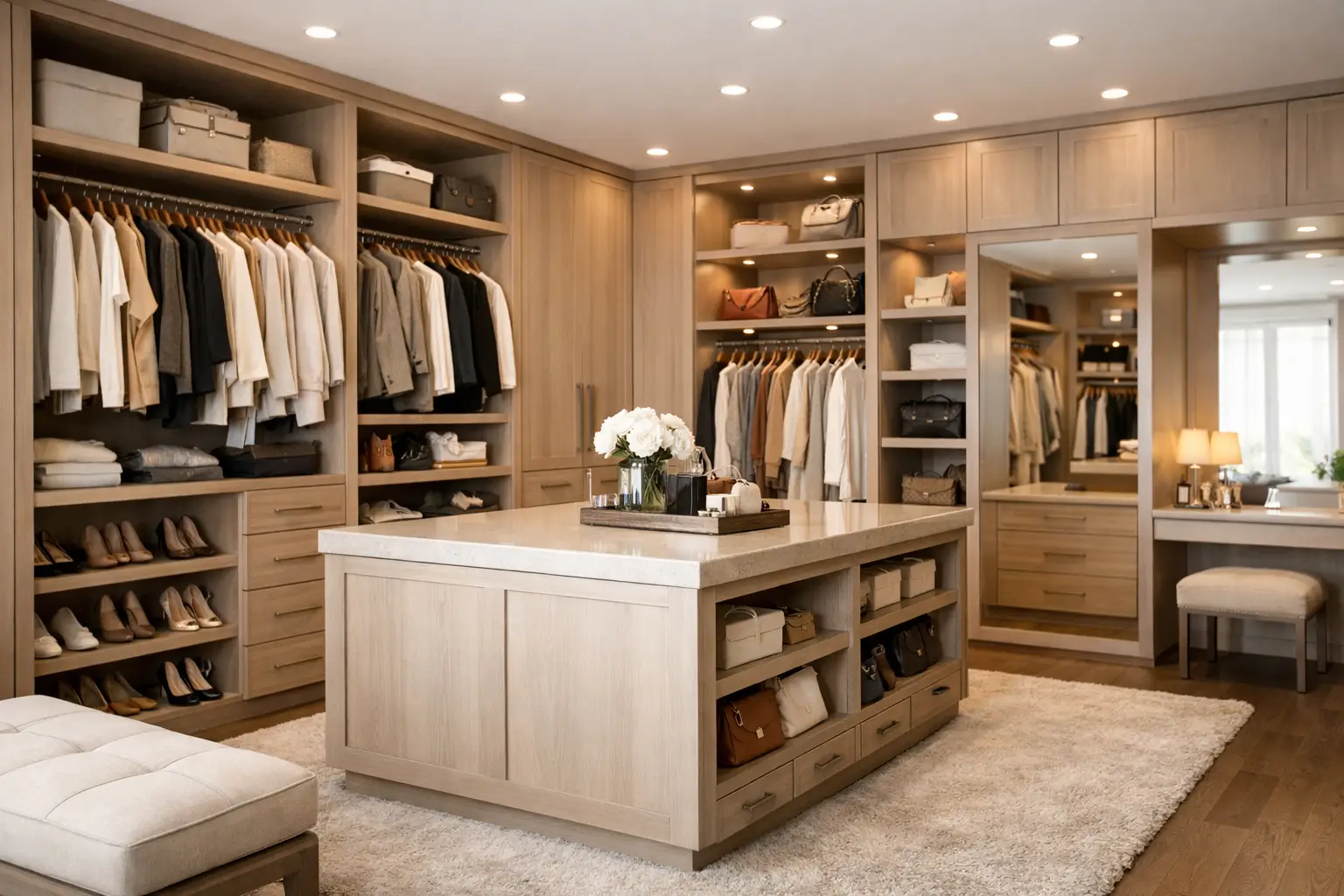
A spare room with rails around the walls is not automatically a luxury dressing space. That distinction matters when homeowners ask what is walk in wardrobe design really about. A true walk-in wardrobe is a dedicated storage area you can step into, move around in, and use as part of your daily routine, with clothing, shoes, accessories, and often mirrors or seating arranged in a way that feels considered rather than crowded.
For some homes, that space is an entire room. For others, it is a carefully planned section behind bedroom doors, tucked into an alcove, loft edge, or awkward footprint that freestanding furniture never handled well. The defining feature is not size alone. It is the combination of access, layout, and fitted organization that turns storage into a functional part of the room.
What Is Walk In Wardrobe Design?
When people ask what is walk in wardrobe design, they are usually trying to understand whether it is simply a large closet or something more tailored. In practice, a walk-in wardrobe is a storage space designed for entry. You do not just open a set of doors and reach in. You step inside the wardrobe area itself, where storage is arranged around you.
That creates a very different experience from a standard wardrobe. Instead of stacking everything behind a few doors and hoping it stays organized, a walk-in layout can give separate zones for hanging clothes, folded items, shoes, bags, jewelry, and dressing essentials. It supports visibility, which is one of the biggest reasons it feels easier to keep tidy.
Good walk-in wardrobe design also makes use of the architecture of the home. Sloping ceilings, chimney breasts, narrow rooms, recessed corners, and uneven walls are often obstacles for off-the-shelf furniture. With fitted joinery, those same features can become useful storage zones.
What Makes a Walk-In Wardrobe Different?
The simplest answer is circulation. A walk-in wardrobe gives you enough room to enter and use the space comfortably. That may sound obvious, but it changes the entire design approach.
A standard wardrobe is mainly about storing things behind a front elevation. A walk-in wardrobe is about creating a storage environment. The layout has to consider how doors open, where drawers sit, how much clearance is needed to stand and dress, and whether both visual balance and daily practicality are working together.
This is why bespoke design matters so much. Two homes with the same square footage can need completely different solutions. One homeowner may need long hanging for dresses and coats. Another may want double hanging, shoe shelving, integrated lighting, and closed cabinetry to keep surfaces calm. Families often need a mix of easy-access daily storage and higher-level space for seasonal items.
Is a Walk-In Wardrobe Only for Large Homes?
Not at all. This is one of the biggest misconceptions.
A walk-in wardrobe can absolutely be expansive, with an island, display shelving, and room to sit. But it can also be compact and highly efficient. In many homes, especially where space is at a premium, the value comes from planning rather than scale.
A narrow box room can become a beautifully organized dressing room. An underused corner of a main bedroom can be enclosed and fitted out to create a walk-in space. Loft rooms often benefit from bespoke storage because standard furniture wastes the lower edges where the ceiling slopes. In period properties, awkward alcoves and uneven dimensions can make fitted wardrobe design far more effective than trying to force matching freestanding units into place.
If the layout allows you to step in, access your clothing easily, and use the space without frustration, it can function as a walk-in wardrobe even if it is relatively modest in size.
The Real Benefits of a Walk-In Wardrobe
The appeal is partly visual, but the practical advantages are what make it worthwhile.
First, a walk-in wardrobe helps you use space more efficiently. Floor-to-ceiling fitted storage makes far better use of the room than a collection of freestanding pieces with gaps above, beside, and behind them. This matters in both large and compact homes because wasted inches quickly add up.
Second, it improves organization. When everything has a designated place, getting dressed is quicker and storage feels easier to maintain. Open shelving, pull-out drawers, tailored hanging sections, and accessory compartments all support a routine that works better day to day.
Third, it can make the bedroom itself feel calmer. Moving clothing and personal storage into a dedicated adjoining zone often reduces visual clutter in the main sleeping area. The result is a room that feels more restful and more finished.
There is also a design benefit that should not be overlooked. A bespoke walk-in wardrobe can feel fully integrated with the architecture of the home. Instead of looking added on, it looks intentional.
What Should a Walk-In Wardrobe Include?
That depends on how you live, not just what looks impressive in photos.
The best layouts start with an honest assessment of what you actually store. If you wear tailored clothing to work, hanging space may matter more than shelves. If you own a large shoe collection, shallow shelving with good visibility will be more useful than deep cupboards. If two people are sharing the wardrobe, the storage should reflect both routines rather than splitting the room equally for appearance alone.
Most well-designed walk-in wardrobes include a balance of short and long hanging, drawers for smaller items, shelving for knitwear or bags, and some concealed storage to keep the space visually calm. Mirrors, integrated lighting, and a dressing surface can also make a big difference, especially in rooms without ideal natural light.
The key is proportion. Too much open storage can quickly feel busy. Too many closed cabinets can make the room less convenient to use. The right solution usually sits somewhere in the middle.
Fitted vs Freestanding in a Walk-In Wardrobe
This is where trade-offs become clear.
Freestanding furniture can seem like the simpler route, especially if you want flexibility or a lower upfront cost. But in a walk-in setting, it often leaves wasted corners, inconsistent depths, and awkward gaps that collect dust while reducing storage capacity.
Fitted furniture is more considered. It is designed around the exact measurements of the room and the household using it. That means cleaner lines, more usable storage, and a stronger sense of order. It also tends to look more polished because every section belongs to the overall plan.
The trade-off is that bespoke fitted furniture is a commitment. It is tailored to your space, so the design process needs more thought at the start. For most homeowners investing in long-term usability and finish, that is a worthwhile exchange.
When a Walk-In Wardrobe Works Best
A walk-in wardrobe works best when it solves a real problem, not just when it follows a trend.
If your bedroom feels crowded with drawers, rails, and mismatched storage, separating those functions can transform the way the room feels. If your home has an awkward spare room that is too small for guests but too useful to ignore, a dressing room may be the better use of space. If you are renovating and want every part of the home to feel intentional, fitted storage helps create that sense of cohesion.
It is also especially valuable in homes where off-the-shelf furniture has never sat properly. In many properties across places like Richmond, Wimbledon, and Chelsea, character features and uneven dimensions make tailored joinery the more elegant solution.
What to Consider Before You Plan One
Before moving ahead, think about how much clearance you truly have, how much of your storage should be open versus closed, and whether the wardrobe will be used by one person or shared. Lighting matters more than many people expect, and so does the way the space flows from the bedroom or hallway into the wardrobe area.
It is also worth thinking beyond clothing. Many homeowners want a walk-in wardrobe to store luggage, laundry baskets, spare bedding, or everyday accessories. That can work well, but only if those functions are planned in from the beginning rather than added later.
A thoughtful design process usually saves money and frustration because it prevents the common mistake of creating something that looks attractive but does not quite support real life.
At its best, a walk-in wardrobe is not just extra storage. It is a better way to use space, simplify routines, and make the home feel more composed. If the design is shaped around your room and your habits, it becomes one of those upgrades that feels good every single day.

