
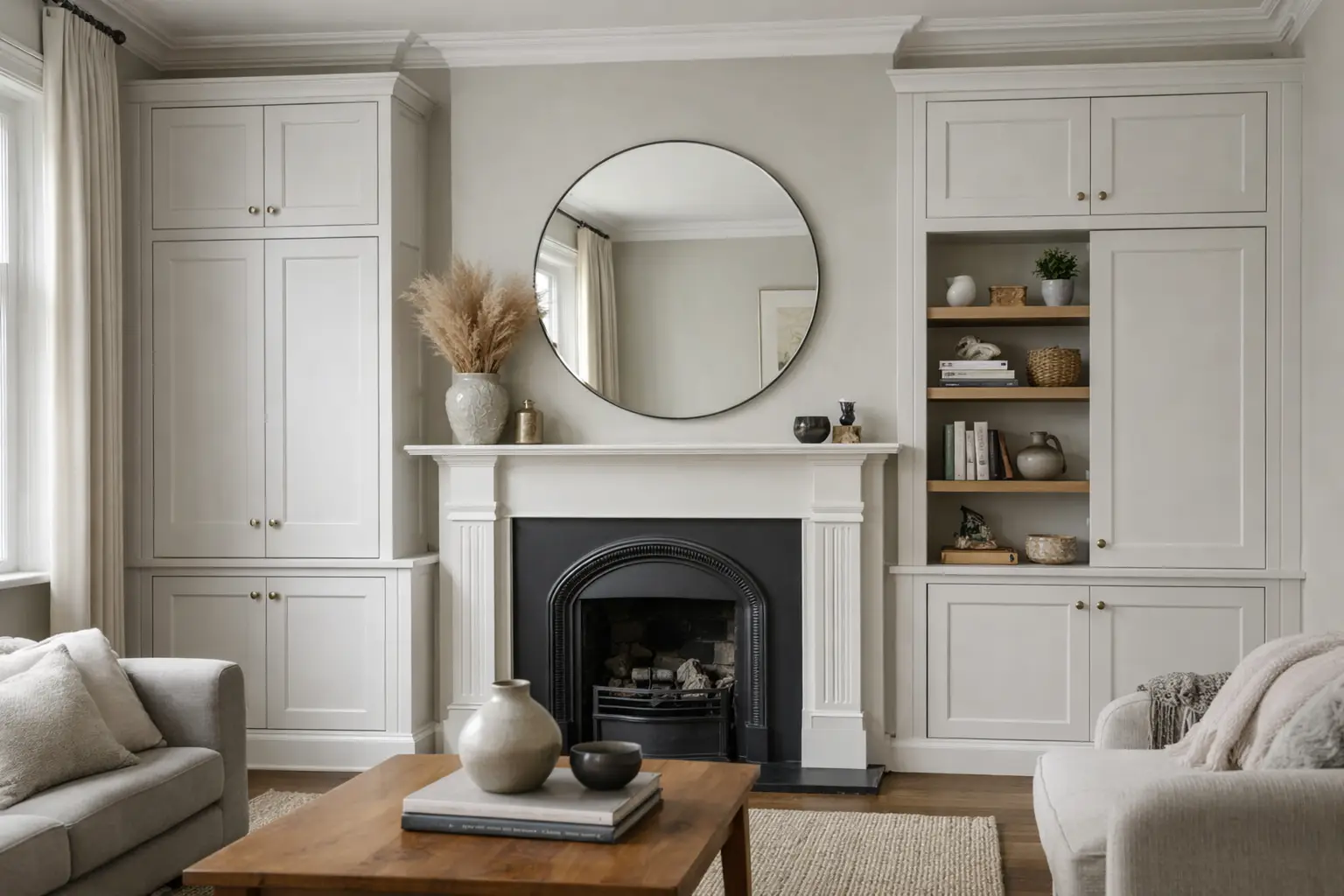
Period homes in Chiswick rarely waste character, but they often waste space. Chimney breasts, uneven walls and shallow recesses can leave you with awkward gaps that attract clutter or furniture that never quite fits. That is exactly why alcove cupboards Chiswick homeowners invest in tend to make such a visible difference – they turn difficult corners into storage that feels built into the architecture rather than added as an afterthought.
Done well, an alcove cupboard is not just a cabinet pushed into a niche. It should correct the proportions of the room, respect the style of the property and make daily life simpler. In living rooms, that might mean hiding cables, board games and paperwork behind clean painted doors. In bedrooms, it could mean turning dead space beside a chimney breast into calm, useful storage that frees up the rest of the room.
Why alcoves are worth designing properly
Alcoves look straightforward until you try to furnish them. Off-the-shelf units are often too deep, too narrow or too tall in the wrong places. Even if one technically fits, it can leave ugly gaps, block sockets or sit proud of skirting boards and picture rails.
Bespoke joinery solves that by responding to the room as it is, not as a standard catalogue assumes it should be. In Chiswick, where homes range from Victorian terraces to mansion flats and more modern family houses, that matters. Few alcoves are perfectly square, and older properties in particular tend to have subtle irregularities that become very obvious once furniture is installed.
A made-to-measure cupboard can follow the line of the walls, work around existing features and use the full footprint efficiently. Just as important, it can feel balanced. That visual calm is often what people notice first, even before they appreciate how much extra storage they have gained.
What makes good alcove cupboards in Chiswick?
The best alcove cupboards Chiswick homes tend to share are not necessarily the most elaborate. They are the ones that look settled in the room. Proportion, detailing and practicality matter more than overcomplicating the design.
Height is one of the first decisions. Some homeowners want low-level cupboards with open shelving above, especially in reception rooms where books, art and lighting should remain visible. Others prefer full-height units that create a cleaner wall and deliver more concealed storage. Neither is always right. It depends on ceiling height, natural light and how formal or relaxed you want the room to feel.
Depth also deserves more thought than people expect. Deeper cupboards provide better storage for larger items, but they can make a room feel tighter if the alcove is shallow to begin with. In narrower London homes, a slimmer cupboard with carefully planned shelves can be the better choice, even if it sacrifices a little raw capacity. A bespoke design should improve the room, not dominate it.
Then there is the finish. Painted shaker fronts remain popular because they suit both traditional and contemporary interiors, but they are not the only route. Smooth slab doors can look crisp in more modern spaces, while timber accents can add warmth if the room risks feeling too flat. The right finish should work with the rest of the home rather than chasing a trend that may date quickly.
Living room alcoves: storage without visual noise
Living rooms are where alcove cupboards often earn their keep fastest. These spaces have a habit of collecting everything that supports family life but does not deserve to be on show – remotes, chargers, toys, paperwork, candles, spare throws and the bits that never seem to belong anywhere else.
A fitted alcove cupboard gives those items a proper home while preserving the room’s character. If the property has period features, careful detailing can help the cabinetry sit comfortably alongside cornicing, skirting and fireplaces. If the room is more contemporary, cleaner lines and discreet handles may be enough to create the same integrated effect.
There is also a practical design question around shelving. Open shelves above cupboards can be beautiful, but only if you genuinely want to style and maintain them. They suit books, ceramics and a few decorative pieces. They are less helpful if your priority is hiding everyday clutter. In that case, more closed storage may serve you better.
Media equipment is another common consideration. Many households want a cupboard to support a television setup without letting wires and devices dictate the whole design. That means planning ventilation, cable access and plug placement early, rather than treating them as awkward technical details to sort later.
Bedroom alcoves: making small rooms feel easier
In bedrooms, alcove cupboards can change how the whole room works. Freestanding bedside drawers and mismatched storage often nibble away at circulation space, making the room feel busier than it is. Bespoke alcove cabinetry creates a more resolved layout and can be tailored around how you actually live.
Some clients want low cupboards with display shelves and wall lights above the bedside area. Others use both alcoves for taller wardrobe-style storage to supplement or replace a larger fitted wardrobe elsewhere in the room. Where ceiling height allows, top cupboards can add another useful layer for luggage, seasonal bedding or less frequently used items.
The trade-off is access and feel. Full-height units maximise storage, but they can make a compact bedroom feel more enclosed if not carefully proportioned. Lower cupboards keep the room feeling lighter, though they offer less concealed space. Good design is rarely about taking the maximum possible volume. It is about deciding what the room needs most.
Details that separate bespoke from merely fitted
When people compare quotes, they often look first at door style or overall size. Those matter, but the lasting difference usually comes from the quieter details. Scribed panels that meet uneven walls neatly, cabinetry cut around skirting boards, soft-close hardware, shelf spacing that suits real objects and paint finishes chosen to complement the room all contribute to the final impression.
This is also where bespoke work justifies itself over modular alternatives. Standard furniture may appear cheaper at first, but if it leaves unusable voids, fights the architecture or needs replacing sooner, it is not necessarily better value. A well-made alcove cupboard should feel purposeful for years, not simply acceptable on installation day.
For many homeowners, timing matters too. A clear process from design visit through manufacture and fitting makes the project easier to commit to, especially if the work is part of a wider room refresh. Finest Furniture Studio focuses on made-to-measure storage with transparent pricing, a 10-year guarantee and a typical 7-10 day fitting timeline, which gives customers reassurance that bespoke need not mean open-ended disruption.
Choosing a style that fits your home
Chiswick homes often have a strong architectural identity, and the cabinetry should respect that. In a Victorian or Edwardian property, classic framed fronts and painted finishes usually feel at home. In a more contemporary interior, a simpler profile may be the stronger choice.
Colour needs similar care. Matching the wall colour can make cupboards recede and feel calmly integrated. Contrasting tones can turn them into a design feature, particularly in larger rooms with good light. Neither approach is automatically more sophisticated. It depends on whether you want the joinery to disappear quietly into the background or provide visual structure.
Handles, too, affect the mood more than many expect. Knobs and cup pulls lean more traditional, while slim metal pulls or push-to-open mechanisms feel more modern. The right decision often comes down to the house itself and how tactile you want the furniture to feel in daily use.
Is bespoke always the right answer?
Not always. If an alcove is very simple, your budget is tight and aesthetics matter less than basic utility, a freestanding piece may be enough. But in many homes, especially those with irregular walls or a strong period character, bespoke cupboards deliver a noticeably better result.
They make particular sense when you want the room to feel tidier, more spacious and more intentional all at once. That combination is hard to achieve with standard pieces because standard pieces are built for average spaces, and alcoves almost never are.
The real value is not only in adding storage. It is in removing friction from the room. When everything has a place, when awkward gaps disappear and when the furniture looks as though it belongs to the house, the space becomes easier to live in every day.
If you are considering alcove cupboards, the best starting point is not a style board but a practical question: what should this room do better than it does now? Once that is clear, the design tends to follow – and the finished result feels less like extra furniture and more like the room finally making sense.

